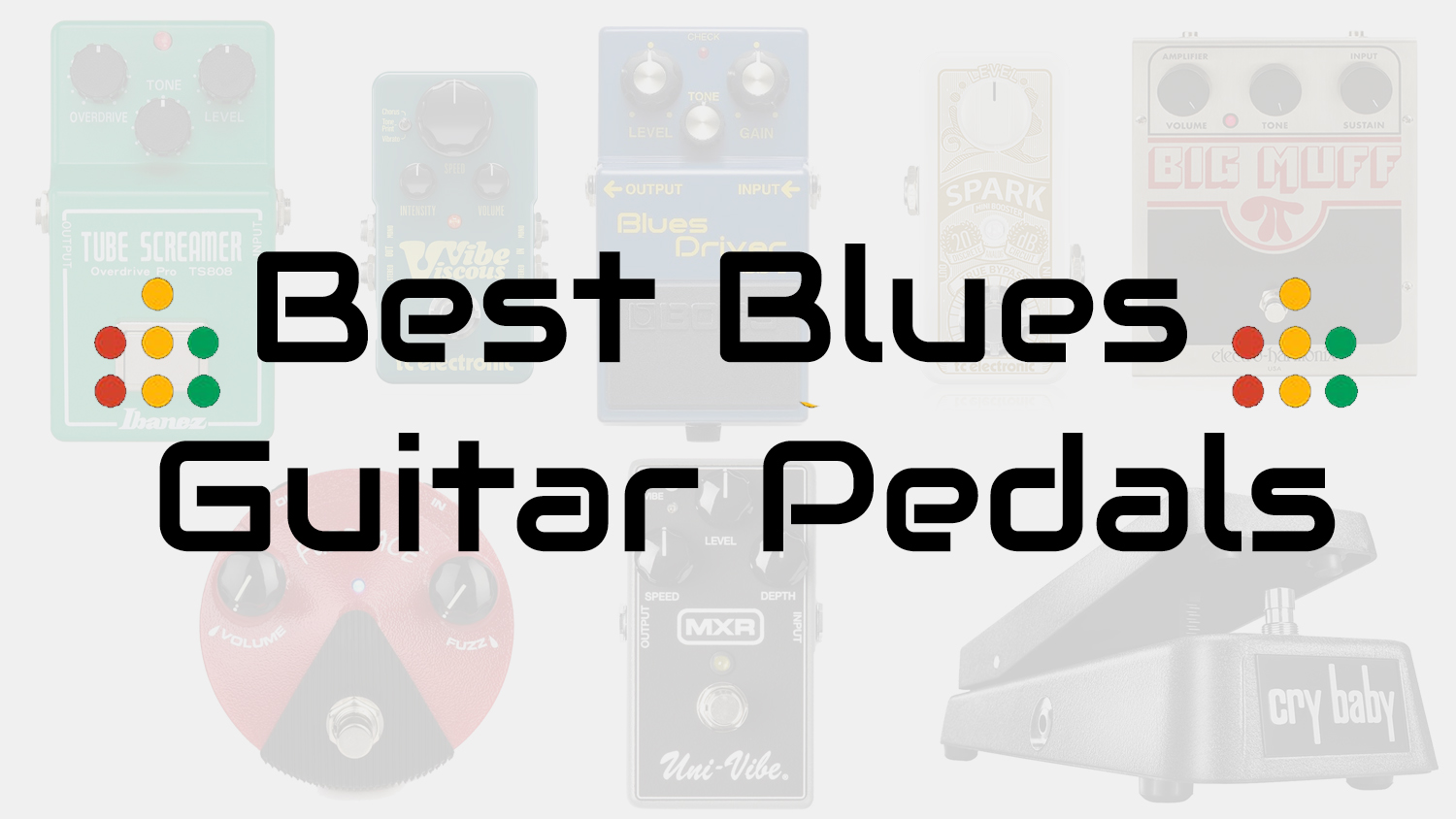
Rock would not be what it is today if it weren’t for the blues, and blues today wouldn’t be what it is without rock. Even though it’s a genre that relies more on technique than gear, players often wonder – what are the best blues guitar pedals?
Many of the most legendary guitar heroes in history have studied (read: worshipped) the blues, from iconic virtuosos like Eric Clapton, Jimmy Page, Keith Richards, and Jimi Hendrix to the future legends of the new school like Joe Bonamassa, Kenny Wayne Shepherd, and Gary Clark Jr.
Blues is a style more dependent upon soul than a lengthy signal chain of effects, but a few deliberate choices of the right stompboxes can help to maximize your tone.
With these pedal selections you can cover ground from traditional purist blues all the way to more modern, hybrid sounds.
Best overdrive pedal for blues: Ibanez Tubescreamer TS808
Best overdrive pedal for blues

Ibanez TS808 Tube Screamer
A good overdrive is the cornerstone of the blues sound.
Pros
- Good gain range
- Can drive the front end of an amp
- Versatile
Cons
- None
Buy from
We may earn a commission from these links.
A Tubescreamer-style overdrive is the quintessential dirt pedal for blues. Perhaps the most notorious player to sport the little green monster was the legend himself – Stevie Ray Vaughan.
One of the best reasons that this type of overdrive makes one of the best blues guitar pedals is that many players use guitars with single-coil pickups, and the characteristic “mid-hump” EQ curve of the circuit complements the mid-range scoop of those kind of pickups quite perfectly.
But a Tubescreamer-style is far from the only overdrive that suits the blues. Anything with a strong mid-range and not too much gain will do the trick. Some other solid choices are “transparent” drives like a MXR Timmy or Klon Centaur, or anything on the lower end of the gain spectrum.
Best fuzz pedal for blues: Dunlop Fuzz Face
Best fuzz pedal for blues
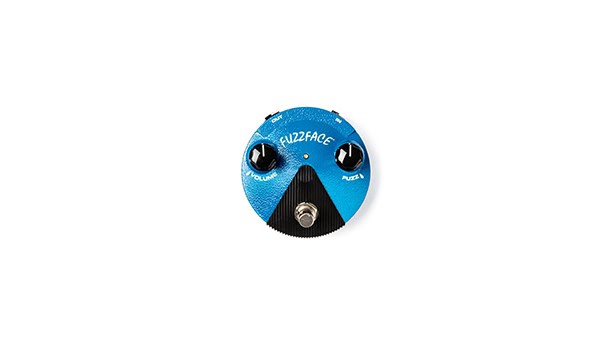
Dunlop Fuzz Face
Fuzz is one of the most unique drive options for blues tones.
Pros
- Aggressive blues sounds
- Can get unique tones when stacked with other effects
Cons
- Clipping might be too much for some players
- Tone can be indistinct
Buy from
We may earn a commission from these links.
Blues might not be the first type of music that comes to mind when you think of a fuzz sound, but they have found their way onto the pedalboards of blues players for the better part of half a century.
From blues/classic rock hybrid artists like Keith Richards and Jimi Hendrix to hardline blues artists like Clapton and Beck, a fuzz pedal and the blues are a match made in heaven.
There are two main types of fuzz circuits – germanium and silicon. Germanium fuzz pedals generally have a more aggressive sound with a narrower EQ focus on the midrange. Silicon produces a somewhat smoother type of fuzz, has a wider frequency spectrum, and can generally produce more gain than germanium.
Both have their merits so it’s up to you to try each out to see which is the best fit for your guitar pedal chain.
Best clean boost for blues: MXR Micro Amp
Best clean boost for blues
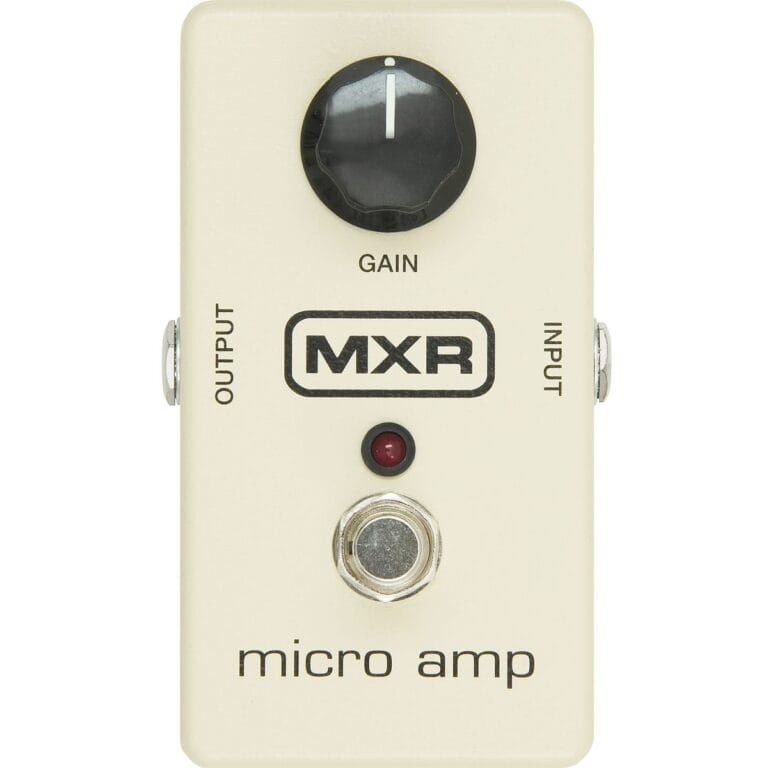
MXR Micro Amp
Add more volume to your signal or push the front end of your amp.
Pros
- Adds volume without clipping
- Easy to dial in
- Ergonomic footprint
- Can drive an amp or other pedals
Cons
- None
Buy from
We may earn a commission from these links.
With a style where expressive soloing is so fundamental, you’re going to want to be able to cut above the band for a solo. Blues is not a style reliant on a lot of gain, so a solid clean boost might be exactly what you need to make your solos sing.
That’s not to say that you might not want to use a second overdrive (you can always turn the gain down), but don’t disregard how useful a simple clean boost pedal can be at lifting your signal or driving the front end of the amplifier.
Best reverb pedal for blues: BOSS RV-6
Best reverb pedal for blues
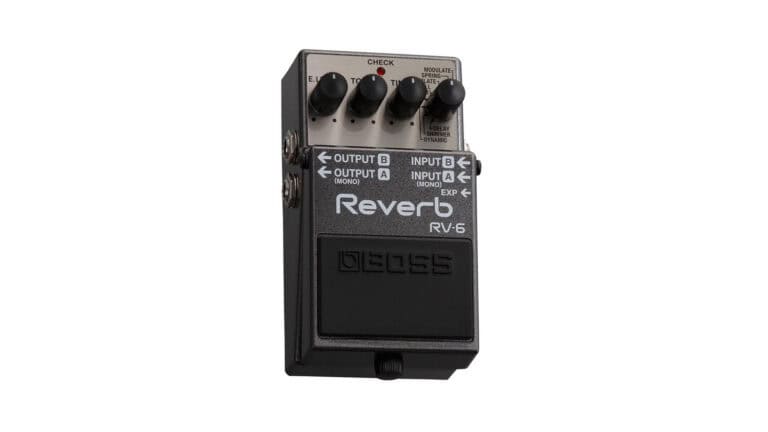
Boss RV-6
One of the best effects for the genre – especially slow blues where reverb really shines.
Pros
- Adds space and dimension to sound
- Can be subtle or used as an effect
Cons
- Might be redundant with amp reverb
Buy from
We may earn a commission from these links.
Whether it’s from an amp or a pedal, nothing lets a guitar tone breathe like reverb. It’s the perfect effect for blues, especially slow blues jams where there is a lot of space between notes.
That’s why having a versatile reverb on your pedalboard can be a gamechanger. Even if your amp has the effect, with a pedal you can dial in more “out there” settings and experiment in ways that complement – or replace – the need to use your amp’s reverb.
Best delay pedal for blues: Ibanez Analog Delay Mini
Best delay pedal for blues
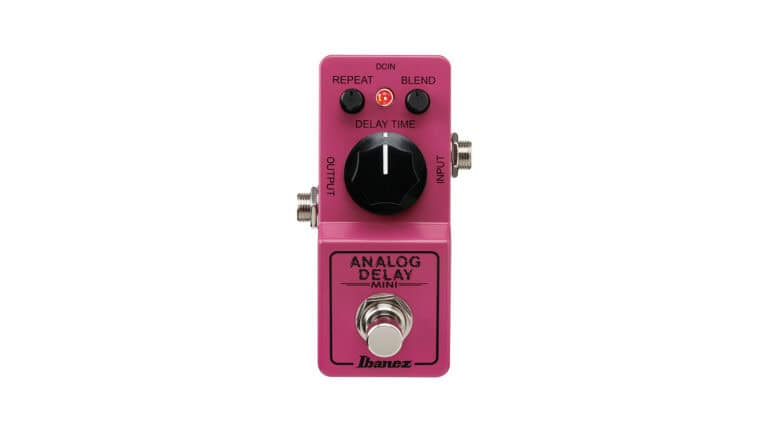
Ibanez Analog Delay Mini
Warm, analog repeats in an ergonomic casing.
Pros
- Ergonomic enclosure size
- 100% analog signal path
- True bypass switching
Cons
- Small design won't suit every preference
- Shorter delay times than digital models
Buy from
We may earn a commission from these links.
The Ibanez AD9 is a favorite analog delay among blues guitar players, and it also comes in a mini format.
An all-analog signal path offers vintage-style repeats with delay times that range from 20ms to 600ms. Three simple controls – Delay, Repeat, and Blend – make dialing in sounds easy. The Blend control is especially useful to thin out the thick sound inherent in analog delays.
Best wah pedal for blues: Vox V846
Best wah pedal for blues
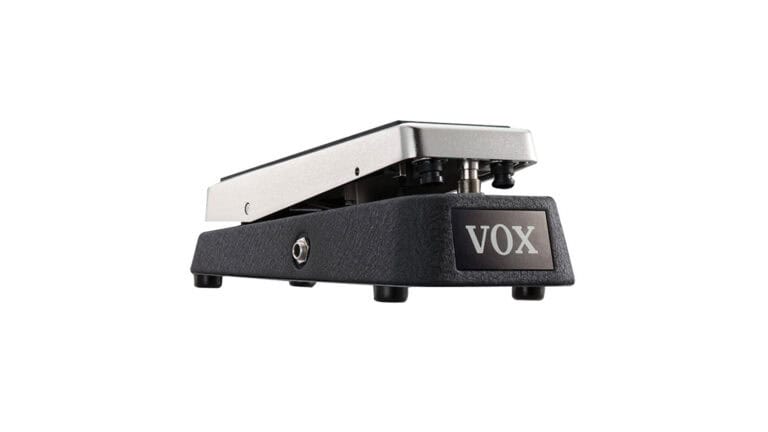
Vox V846
One of the most important pedals for adding real-time expression to your playing.
Pros
- Add expression to your playing
- Can be used in stationary mode as a filter
Cons
- Takes up a lot of pedalboard space
Buy from
We may earn a commission from these links.
A style as soulful as the blues needs an effect that is as equally expressive, and there might not be a better effect for this than wah.
From the old school to the new, any blues player can find a use for it in their signal chain. In addition to offering a way to really make guitar parts speak, a wah can also be used in a fixed position as an additional tonal control.
Best rotary/Uni-vibe for blues: MXR M68
Best rotary/Uni-vibe for blues
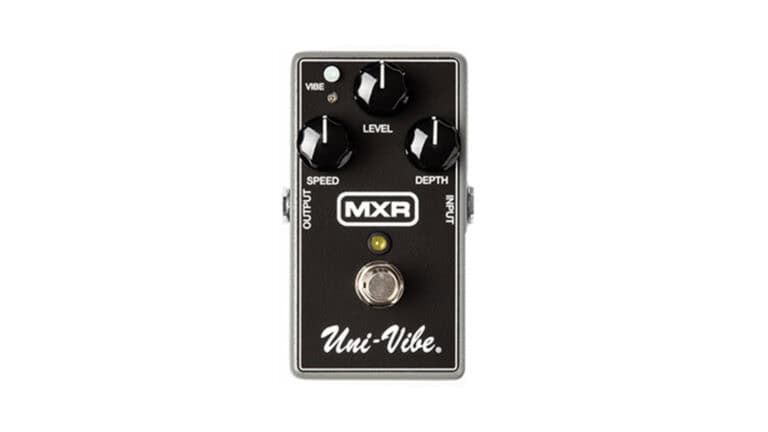
MXR M68
A classic blues effect used by legends like Jimi Hendrix and Robin Trower.
Pros
- Adds movement to guitar sounds
- Conjures vintage blues tones
- Multiple control parameters
Cons
- Won't fit every song
- Some introduce signal noise
Buy from
We may earn a commission from these links.
While modulation effects are usually not crowding the pedalboards of blues guitarists, many of the legends are known to use some sort of rotary speaker effect.
Leslies are the most popular, but if you don’t have the capital to pay a team of people to haul a gargantuan piece of delicate equipment to and from your gigs, there are a lot of pedals that can get you where you need to be.
And if a rotary effect isn’t quite your thing, you can get an approximation by combining a phase shifter with tremolo – especially when used in stereo.
What to look for when shopping for blues guitar pedals
Analog is often fits the blues best
Digital multi-effects offer convenience and versatility, but a lot of blues players still gravitate toward analog pedals because of their warm tones and simplicity of use.
Analog circuits produce smoother clipping and a more natural feel. Vintage-inspired pedals are particularly popular in blues because they recreate the tones heard on classic recordings.
But modern digital pedals have drastically improved, and sometimes a mix of analog and digital effects make for a great hybrid signal chain.
Boost pedals are great for solos
Soloing is a huge element of blues music. Clean boost pedals are popular with blues guitarists because they can push a tube amp into natural breakup without dramatically changing the core tone.
A good boost pedal adds sustain, volume, and richness to solos. Some players stack a boost with an overdrive for thicker tones and added harmonics
Responsive overdrive is ideal
When it comes to electric blues, the most important pedal on your board is an overdrive. Blues players typically look for tones that respond naturally to picking dynamics and guitar volume knob adjustments instead of heavy distortion or ultra-compressed saturation.
A good blues overdrive should add warmth, sustain, and grit while still letting the character of your guitar and amp shine. Transparent overdrives work well for players who want subtle breakup, while mid-focused pedals can help solos cut through a mix.
FAQ
Do I need expensive pedals to get a good blues tone?
Not at all! There are fantastic budget-friendly options that deliver excellent blues tones. Experiment with different pedals and focus on getting the tone you want more than the price tag.
Are boutique pedals worth it for blues?
Boutique pedals can offer unique tones, higher-quality components, and durability. Whether they’re “worth it” depends on your needs and budget. Brands like JHS, Wampler, and Keeley produce great pedals for blues, but mainstream options also deliver stellar results.
What’s the best way to experiment with blues tones?
Start by tweaking your pedals’ settings. Experiment with your guitar’s control knobs too. Rolling off the volume slightly can clean up an overdrive, and a lot of blues players ride the tone control to get the most out of their pickups. And don’t forget the amp settings!