Tremolo is one of the oldest guitar effects. Not to be confused with vibrato, which is a fluctuation in pitch, tremolo pedals and amp tremolo is a fluctuation in volume.
There are a lot of different types of tremolos on the market. From the smooth old-school sounds of optical and bias tremolos like those found in vintage amps to digital circuits that can chop the signal up in ways you’ve probably never heard before.
Let’s dive in to some of our favorites!
Best tremolo pedal overall: TC Electronic Pipeline Tap Tremolo
Best tremolo pedal overall
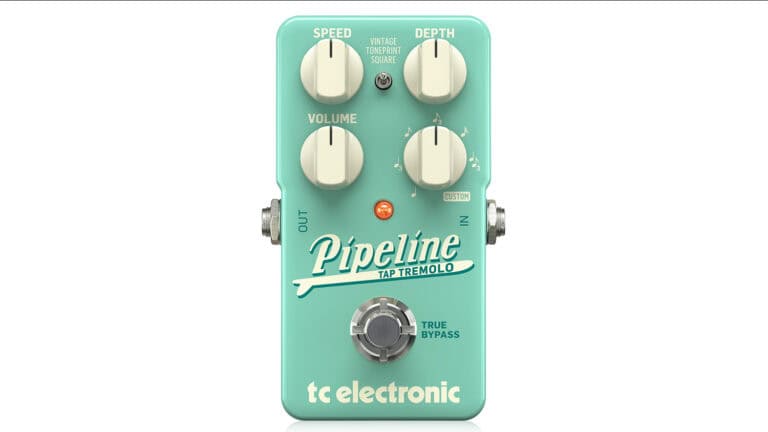
TC Electronic Pipeline Tap Tremolo
An affordable and versatile digital tremolo.
Pros
- 3 modes, including TonePrint
- Flexible sounds
- Six note subdivisions
Cons
- Mono only
- Some might prefer the sound of analog
Buy from
We may earn a commission from these links.
A great tremolo pedal is versatile, sounds authentic, and offers different ways to shape the waveform. The Pipeline is all that and more. It recreates iconic vintage styles of the effect and can pull off modern, complex patterns.
You can shift between warm, analog-style sine waves or chop the signal up with square waves through a toggle switch. Seven timing subdivisions provide all kinds of versatility, and tap tempo lets you sync the effect perfectly to the song.
The coolest feature is Custom Mode. It allows you to program a bespoke tremolo rhythm over up to four bars. This opens up all kinds of ways to shape the effect for creative guitar sounds you never thought a tremolo could do.
And since it’s in the TonePrint series you can load in presets or create your own with the TonePrint editor.
Best amp-like tremolo pedal: Strymon Flint V2
Best amp-like tremolo pedal
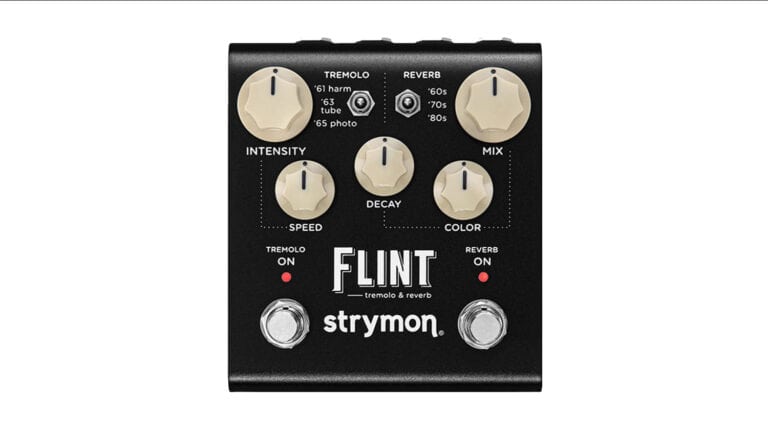
Strymon Flint V2
The best tremolo and reverb hybrid pedal.
Pros
- Independent effects
- Two layers of controls
- JFET input circuit for better response
- Mono and stereo
Cons
- Larger enclosure than a standard pedal
Buy from
We may earn a commission from these links.
Many older guitar amp models had two onboard effects, reverb and tremolo. But a lot of newer amps might only have reverb, or neither effect. Flint V2 is the answer to that. It’s a combination reverb and tremolo with three different modes for each.
Powered by an ARM DSP chip, the reverb modes include a splashy 60’s spring reverb, a 70’s electronic plate ‘verb, and an 80’s hall that recalls the sound of early rack effects. For tremolo, there’s a ‘61 harmonic style, a swampy ‘63 power tube tremolo, and a ‘65 photocell (optical) mode that offers some nice chop.
There are Decay, Color, and Mix controls for the reverbs and Speed and Intensity for the tremolos. But you know Strymon didn’t limit the controls like that. There are “hidden” secondary controls to further customize the sound if you want.
The input is mono and the output works in mono or stereo. An additional input lets you connect a footswitch for instant preset recall. It responds like a real amp too thanks to the JFET input circuit.
Best analog tremolo pedal: JHS Pedals Tidewater
Best analog tremolo pedal
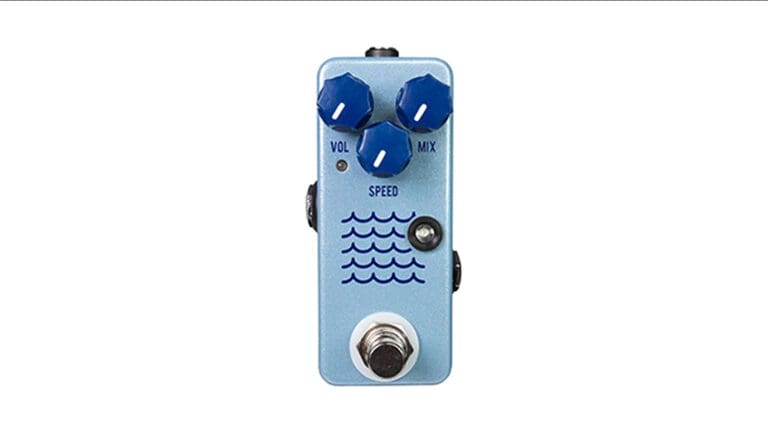
JHS Pedals Tidewater
A circuit inspired by vintage amplifier tremolos.
Pros
- Simple controls
- Can be used as a preamp booster
- Internal switch to select faster or slower speed
Cons
- Not as elaborate as other options
Buy from
We may earn a commission from these links.
Analog tremolo like those found on guitar amplifiers is a simple effect. There are usually just controls for the depth and speed/rate of the effect. JHS brings that idea to your pedalboard, but changes things up a bit.
There are controls for Speed, Mix for blending in dry signal, and output Volume. The latter is very useful, since there can be a signal level drop when a tremolo effect is engaged. You can even turn the Mix knob down the whole way and use it as a preamp booster!
An LED to the left of the Speed control flashes in tempo with the effect, so you get a visual readout of how fast it’s moving. This is very handy in dark environments. It’s housed in a mini enclosure too, so it doesn’t take up too much pedalboard real estate.
Best digital tremolo pedal: Source Audio Vertigo
Best digital tremolo pedal
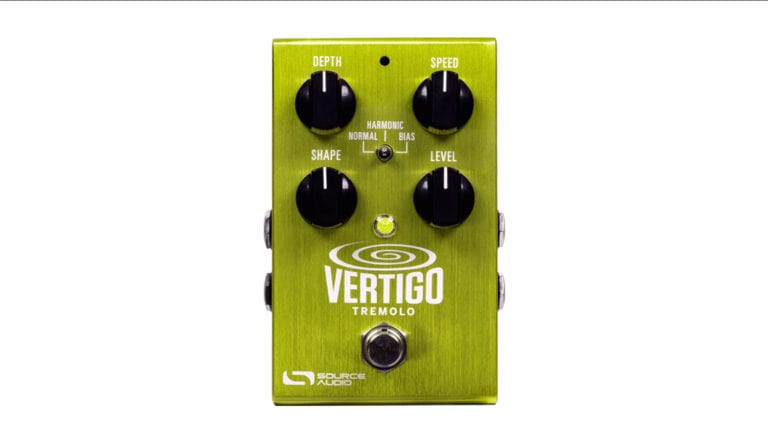
Source Audio Vertigo
Powerful DSP based on classic amps.
Pros
- 3 modes
- Shape control morphs between four waveform types
- Customization through Neuro Editor
- Mono or stereo
Cons
- Some players prefer more natural analog tremolo
Buy from
We may earn a commission from these links.
Tremolo is usually associated as an analog effect, but you’d be surprised how many are actually digital. Source Audio makes some killer digital stompboxes, and the Vertigo is one of the best digital tremolos.
Three classic tube tremolo effects include Normal, an optical type that conjures the amp-style tremolo of a 1967 Fender Vibrolux. Harmonic is a rich and complex sound that recreates early-’60s American amp tremolo like the 1962 Brownface Super. Bias is an emulation of the type of tremolo that occurs when the bias voltage of preamp tubes modulates.
Depth, Speed, and Level controls are familiar, but the magic is in the Shape knob. It lets you morph the waveform from smooth sine to saucy square, to optical and sawtooth. Further editing can be done through the free Neuro Editor software that works on desktop and mobile devices.
By diving into it you access “hidden” features like a 4-band parametric EQ, tap tempo, presets and more. It runs in mono or stereo, can take an expression pedal for real-time response, and through the (sold separately) Neuro Hub you can even integrate MIDI.
Best workstation tremolo pedal: Electro-Harmonix Super Pulsar
Best workstation tremolo pedal
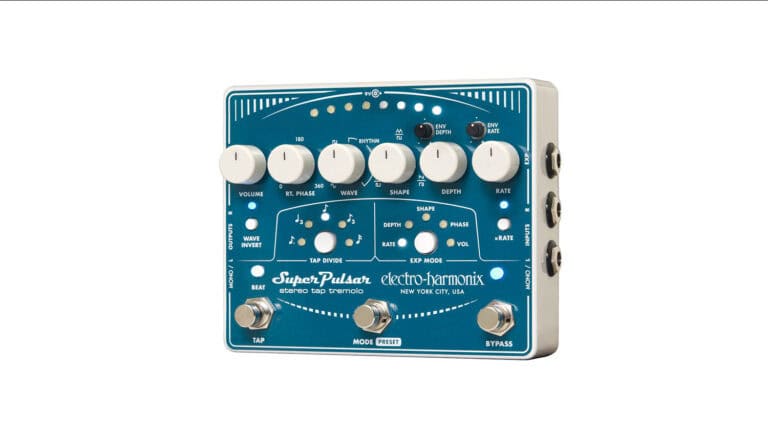
Electro-Harmonix Super Pulsar
An analog tremolo with a vast suite of sounds, controls, and I/O.
Pros
- Multiple wave shapes and rhythmic effects
- Robust controls
- External tap and expression
- Save up to 8 presets
Cons
- Discovering capabilities takes time
Buy from
We may earn a commission from these links.
Most tremolo pedals are intentionally simple, but this a full-on analog workstation. Wave shapes include sine, and triangle. Each side of the stereo field operates independently, so you can dial in two completely different sounds and blend them.
An additional nine effect patterns bolster rhythm options, and they can be saved for future recall. The main I/O is stereo, there are external inputs for expression pedals and CV controllers, and a tap tempo control switch in the pedal housing.
The control set is remarkably in-depth. Everything from selecting the wave type, to subdivisions is present. But it goes much deeper than that with ways to control the envelope, wave inversion, and expression pedal parameters.
Analog tremolo pedals don’t get much more robust than this.
Best experimental tremolo pedal: Earthquaker Devices Hummingbird V4
Best experimental tremolo pedal
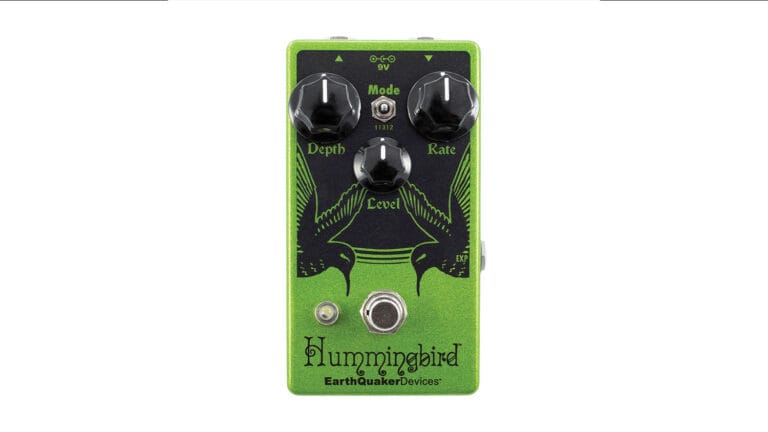
Earthquaker Devices Hummingbird V4
The most unique tremolo sounds you’ll find in a standard-size pedal.
Pros
- 3 modes
- Flexi-switch for latching or momentary operation
- Expression pedal input
Cons
- Sounds might be too "out there" for some players
Buy from
We may earn a commission from these links.
Another analog tremolo pedal with a JFET input stage, the Hummingbird is for guitar players who want a style of shake that’s a little left of center. It’s a repeat percussion tremolo, perfect for experimentation, that can go from barely there to synthesizer-like slicing.
Three modes set the rate scale, and the standard Depth, Rate, and Level controls fine tune the sound. Version four includes a flexi-switch. You can hold it for momentary operation or use it as a standard on/off bypass switch. Connecting an expression pedal gives the user real-time control over the rate.
What to look for in a tremolo pedal
Analog vs. digital
The choice between analog and digital circuitry boils down to personal preference.
Analog tremolo pedals offer warm, organic modulation that closely resembles the built-in tremolo circuits in vintage tube amplifiers. Digital pedals typically offer more features, like multiple waveforms, presets, MIDI compatibility, and stereo I/O.
Neither approach is objectively better. The best choice depends on whether you prioritize classic simplicity or modern versatility.
Choose the right waveform
The waveform determines how the volume rises and falls over each modulation cycle. This dramatically affects the overall character of the effect.
Sine waves create a smooth, vintage-style pulse that’s perfect for surf rock, blues, country, and ambient music. Triangle waves provide a slightly more defined rise and fall, while square waves produce an abrupt on/off chopping effect that’s popular in modern alternative, indie, and electronic-inspired guitar playing.
Many premium tremolo pedals also include sawtooth, reverse sawtooth, or harmonic waveforms that expand your creative possibilities even further.
Signal routing
Many modern tremolo pedals include stereo outputs that create a wider, more immersive effect. Instead of both amplifiers pulsing together, stereo tremolo alternates between the left and right channels to produce a spacious, moving soundstage.
This feature is particularly useful for studio recording, dual-amp rigs, and players who perform through stereo PA systems. Some tremolo pedals also include features like expression pedal inputs, effects loops, or advanced routing options that make them easy to integrate into large pedalboards and switching systems.
FAQ
What is a tremolo pedal?
A tremolo pedal modulates the volume of your guitar signal at a selected speed and depth. This creates a pulsing effect. It’s one of the earliest modulation effects and was common on vintage guitar amplifiers.
What’s the difference between tremolo and vibrato?
Tremolo modulates volume and vibrato modulates pitch. Some older amplifier models and effects pedals denote the definitions backwards. It was especially common on Fender amps that labeled the effects circuit vibrato, but in reality it is a tremolo effect.
Where should I place a tremolo pedal in my signal chain?
Guitar pedal chain order is entirely up to the player. A lot of guitar players place a tremolo pedal toward the end of the signal chain after any gain and modulation pedals, but before time-based effects like delays and reverbs.
By placing it near the end of the signal it allows for a more natural, amp-like feel. But you can get all kinds of creative effects sounds by experimenting with placement, even more so if the tremolo pedal has stereo I/O.
Can a tremolo pedal sound like an amp’s built-in tremolo?
Yes! Many tremolo pedals are intentionally designed to emulate classic amp tremolo circuits like those found in the Fender Blackface and Brownface, or the Vox AC series. Optical and bias-style tremolo pedals are best for this.