Guitar volume pedals are a versatile tool that you’ll find on many pedalboards, professional and hobbyists alike.You can pull all kinds of tricks with volume pedals.
Violin-like swells, signal muting, tuner routing, and depending on how you have your signal chain routed you can have a lot of fun with the tails of reverbs and delays. In fact, many effects pedals and processors come with features dedicated to adding additional options when using an external control.
A volume pedal works just like the volume knob on your guitar, but since you can control it with your feet it frees up your hands allowing you to use it like an effect.
Best volume pedal overall: Korg XVP-20
Best volume pedal overall
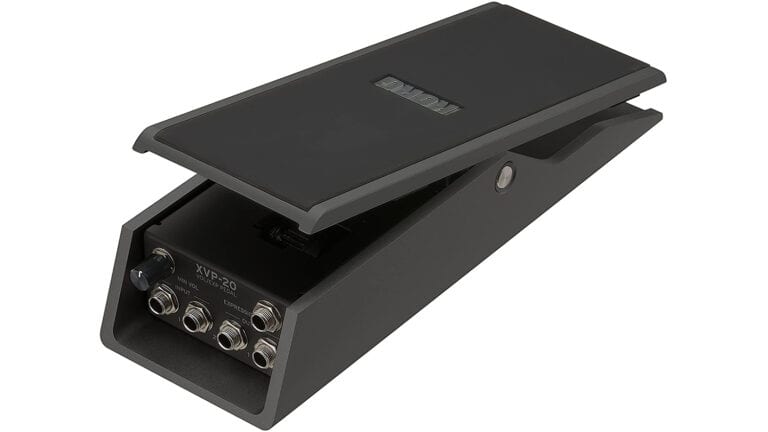
Korg XVP-20
A full-featured volume and expression pedal that fits into any rig.
Pros
- Mono and stereo I/O
- Volume and expression pedal functionality
- Non-slip rubber surfaces
- Minimum volume control
- Adjustable torque
Cons
- None
Buy from
We may earn a commission from these links.

Korg might be the last company you’d think of, but their XVP-20 is one of the best guitar volume pedals on the market. It can be used in mono or stereo modes and as an expression pedal.
An easy-to-access control knob sets the volume range. Solid construction and multiple signal routing options should make this a consideration for anyone looking to add a volume pedal to their setup.
Best passive volume pedal: Ernie Ball 6180 VP Jr. 250k
Best passive volume pedal
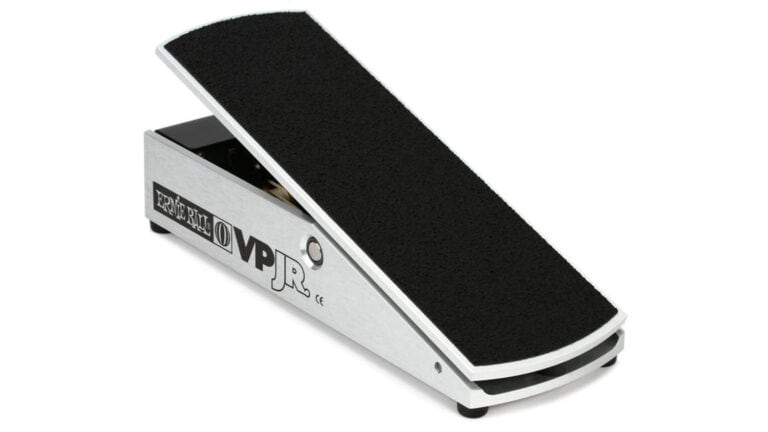
Ernie Ball 6180 VP Jr. 250k
A perfect choice for passive instruments with smooth travel and two swell rates.
Pros
- Ideal for passive instruments
- Smooth treadle travel
- Micro Taper for choosing two swell rates
Cons
- Doesn't work well with active instruments
Buy from
We may earn a commission from these links.
Ernie Ball is well-known to for making some of the best passive volume pedals. They sound great and can stand up to the rigors of the road. This model also features a tuner output.
Best active volume pedal: Dunlop DVP4 X Mini
Best active volume pedal

Dunlop DVP4 X Mini
A mini pedal with auxiliary output that’s built like a tank.
Pros
- Ultra compact
- Aux output for connecting tuner or use as expression pedal
- Internal pot for setting minimum parameter value for expression control
Cons
- Might be too small for some
Buy from
We may earn a commission from these links.
Most volume pedals take up a lot of real estate, but the pedalboard-friendly size will fit nicely into your rig. It has an aux output that can enable expression mode or be used to send signal to a tuner. An internal pot sets minimum parameter value of the sweep for expression control.
Best stereo volume pedal: Ernie Ball 6165
Best stereo volume pedal
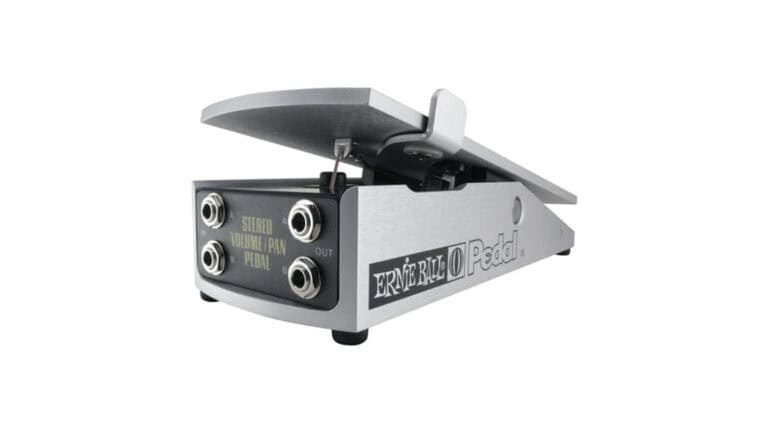
Ernie Ball 6165
A volume and pan pedal that works with passive or active instruments.
Pros
- Works with passive and active instruments
- Controls volume or panning
Cons
- Overkill if you run a mono guitar rig
- 500k potentiometer isn't ideal for some pickups
Buy from
We may earn a commission from these links.
Another great selection from Ernie Ball is this stereo volume/pan pedal. Signal can be routed using TRS or TS cables. It works in a mono guitar rig, but it’s ideal for anyone running a stereo setup.
It comes with the same solid construction that makes the company’s pedals so reliable.
Best optical volume pedal: Morley 20/20 Volume Plus
Best optical volume pedal
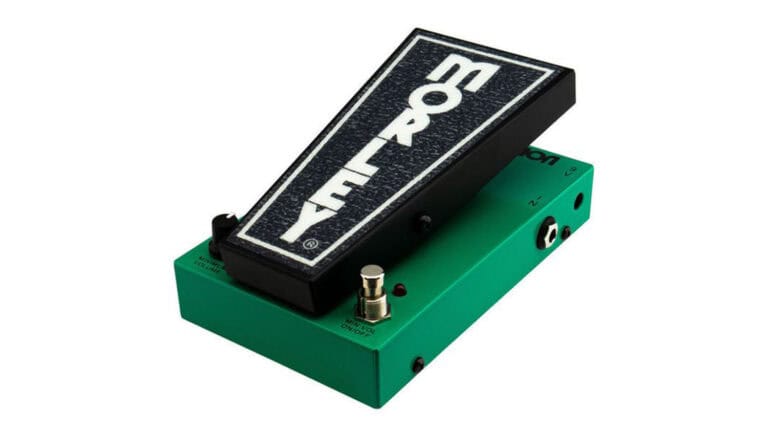
Morley 20/20 Volume Plus
A reliable optical volume pedal with a smooth taper that’s easy to see in dark environments.
Pros
- Smooth taper
- Minimum volume feature
- Electro-optical design eliminates potentiometer
- Ergonomic size compared to other volume pedals
- Glow-in-the-dark treadle
Cons
- Requires 9V power
Buy from
We may earn a commission from these links.
Typical volume pedals are mechanical, and with that comes wear-and-tear concerns. The 20/20 solves this by using an electro-optical sensor instead of a standard potentiometer.
The taper is smooth, and there’s a minimum volume knob by the heel of the treadle. It even glows in the dark! It does require 9V power through a battery or adapter though.
Best magnetic volume pedal: Lehle Active Mono Volume Pedal
Best magnetic volume pedal
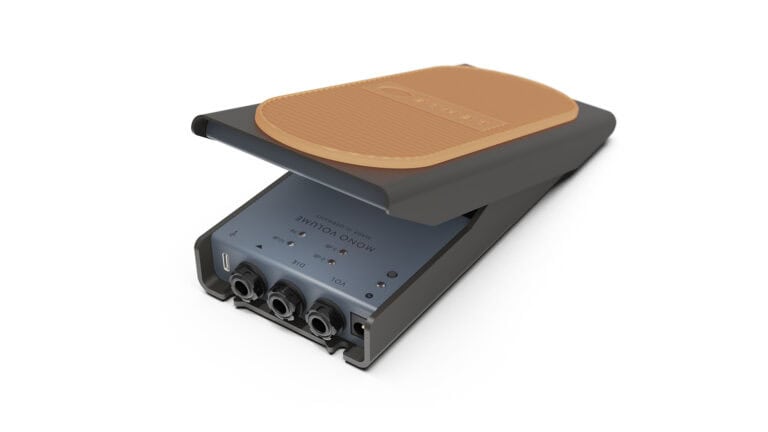
Lehle Active Mono Volume Pedal
One of the most accurate and durable volume pedals thanks to its Hall magnetic sensor.
Pros
- Magnetic sensor provides accuracy and longevity
- Operates at 18V for increased dynamic range
- Premium circuitry
Cons
- More expensive than most volume pedals
Buy from
We may earn a commission from these links.
Most volume pedals use a simple potentiometer like those used for volume and tone controls on guitars and bass guitars. Fewer use an optical sensor, and even fewer still use a magnetic sensor.
Lehle designs have always been a bit against the grain, and thanks to the magnetic Hall sensor users get a smoother operation that’s built to last. The Hall sensor controls the range of the sweep, which controls a premium quality Blackmer VCA (voltage-controlled amplifier).
Input and output impedance remains steady, so there’s no “tone suck” of the higher frequencies that’s so often found in volume pedals built around simple potentiometers.
Thanks to an internal rectifier the pedal operates at 18V, with an overall dynamic range of 110dB. And thanks to low-friction bearings the sweep is smooth and steady.
It’s expensive, but there are few volume pedals designed with this much innovation.
Best boutique volume pedal: Mission Engineering VM1-Aero
Best boutique volume pedal
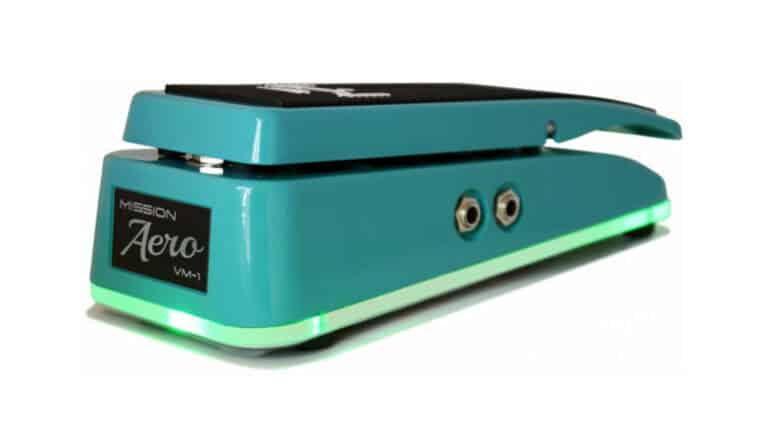
Mission Engineering VM1-Aero
A unique treadle shape adds extension to the sweep.
Pros
- Curved treadle has extended sweep range
- Isolated tuner output
Cons
- Designed for passive pickups only
Buy from
We may earn a commission from these links.
With a treadle that has a unique, ergonomic curve the VM1 is comfortable to use whether you’re standing or sitting.
The heel of the treadle is recessed, which adds range to the sweep. An isolated tuner output prevents tone suck, and the mode switch negates the tuner output.
Handy on a dark stage, the base is illuminated.
Best budget volume pedal: Electro-Harmonix Next Step Volume Pedal
Best budget volume pedal
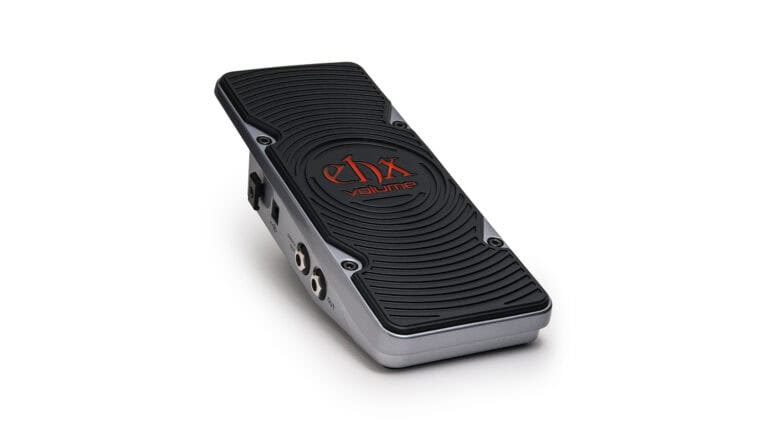
Electro-Harmonix Next Step Volume Pedal
A uniquely shaped volume pedal with multiple functions and silent switching.
Pros
- Works in mono and stereo
- Instant and silent switching
- Direct and effect outputs with bypass level control
Cons
- Some players might find curved base hard to control
Buy from
We may earn a commission from these links.
One of the most affordable guitar volume pedals is also one of the most unique. It doesn’t use a potentiometer for the sweep. Via a motion sensor you get highly expressive control over the volume range.
It has outputs for direct and effects signals and a level control over the bypass. It does require power and be run on a 9v battery or standard power supply.
What to consider when buying a volume pedal
Passive vs. active volume pedals
There is a lot of confusion when it comes to choosing a passive or active volume pedal. Unless requiring external power, all volume pedals are passive.
The distinction is between whether they’re best suited for use with passive or active guitar pickups, as each design uses a different value of potentiometer.
Passive pedals usually use a 500k or 250k value pot. Some players feel that a 500k pot allows more highs to pass through, but you’ll have to see which works best with your rig.
Active pedals require power, and this amplified circuit can also be used as a buffer or to isolate the tuner output. A 25k pot is common in these, as it works better with active pickups.
Pedal placement
So where in the signal chain is best for a volume pedal? It depends.
If you want to use it like the volume control on your guitar, it should be at the front. Generally, after gain pedals and before any time-based effects is an ideal spot, as you can use it to chain the signal going into whatever is after it.
And if it sits before reverbs and delays it won’t cut off the tails. If it’s at the very end, you can use it to fade out the tails.
It’s worth noting that passive pedals can be picky in where they are placed in the signal chain. Those with tuner outputs can be an issue, as splitting the signal can introduce the dreaded “tone suck”.
FAQ
What does a volume guitar pedal do?
They can do a number of different things to the signal, but mainly act as a master volume control – much like the volume knob on a guitar. They let you do volume swells, signal rides, and act as a mute.
What is the difference between an expression pedal and a volume pedal?
A volume pedal works with the guitar signal. An expression pedal doesn’t pass signal, it’s used to manipulate parameters of effects.
Do I need an active or passive volume pedal?
Passive pedals don’t need power and work like a standard volume pot. These are good for simplicity and transparency but can interact with impedance.
Active pedals require power but maintain consistent impedance and tone, especially with long cable runs or complex pedalboards.
Do volume pedals affect tone?
They can, that’s why it’s important to select the right one for your rig. Make sure you purchase a model with the right value of potentiometer (e.g. 500k vs. 250k), and design function (passive vs. active).