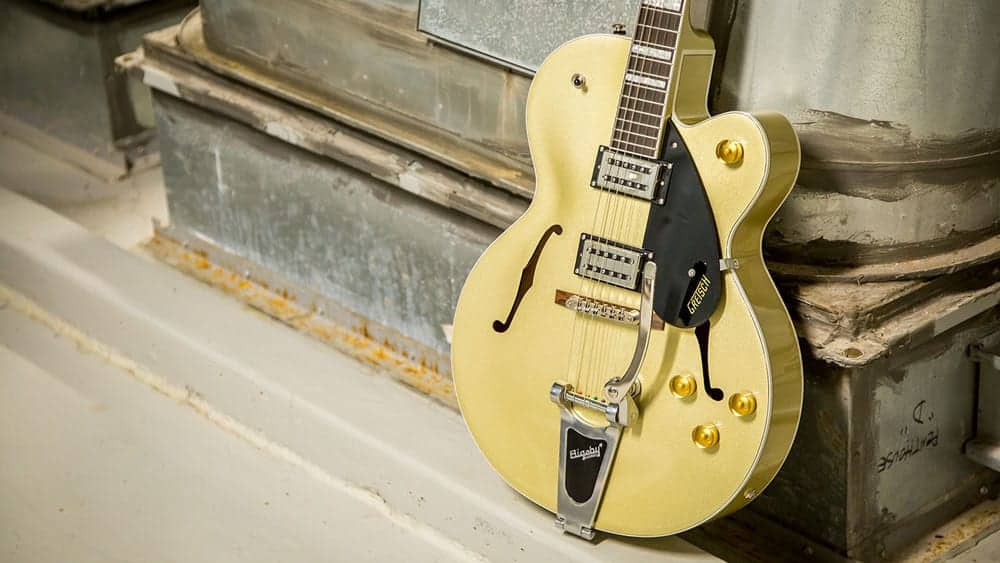
Making sure you have the right guitar for your needs is only one part of the equation. After buying a guitar, you may also want to invest in some accessories to keep your guitar cared for, clean, and great-sounding.
There are a number of accessories we recommend guitarists look into buying. Here’s a rundown of the top accessories we think every guitarist needs.
Pedal tuner: BOSS TU-3
Pedal tuner
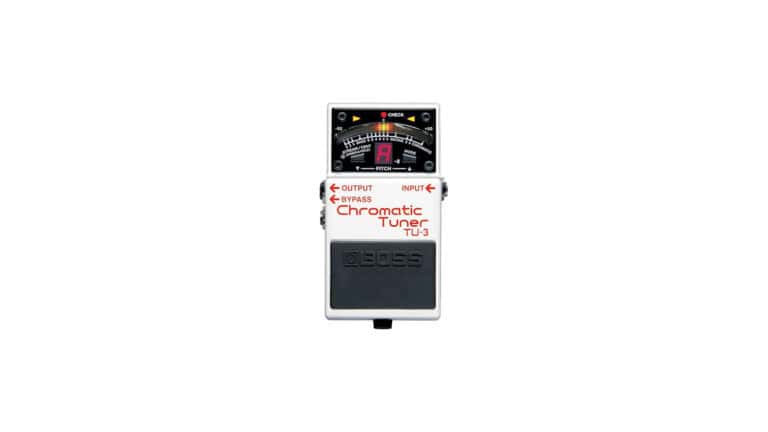
Boss TU-3
A reliable pedal tuner with multiple tuning modes and signal mute or bypass outputs.
Pros
- 21-segment LED meter with brightness control
- Multiple tuning modes
- Signal mute
- Can power other compact BOSS pedals
Cons
- None
Buy from
We may earn a commission from these links.

Let’s face it — no matter how good you think your ear is, there are still plenty of situations in which a tuner might come in handy.
For example, you might not be able to hear your strings in a loud bar or concert hall. Or, you might simply want to double-check your tuning to make sure your guitar sounds as great as it possibly can.
Tuners come in a range of different forms — including a clip-on tuner that you can connect to your guitar’s headstock, a tuner that you can plug your guitar into, and a pedal that offers quick and easy access during a gig.
We actually think all the different forms of tuner can come in handy at different times, so it may well be worth buying one of each — but if you have to get one, a basic plug-in tuner will do the job just fine.
So what about models? Well, if you want a clip-on tuner, the D’Addario NS Micro Tuner is a great way to go. If you’d prefer a plug-in tuner, you can’t go wrong with the Korg TM60BK, which has a built-in metronome.
Last but not least, for a pedal tuner, the classic Boss TU-3 is the industry standard and a great choice.
Metronome: DeltaLab DMT-1
Metronome
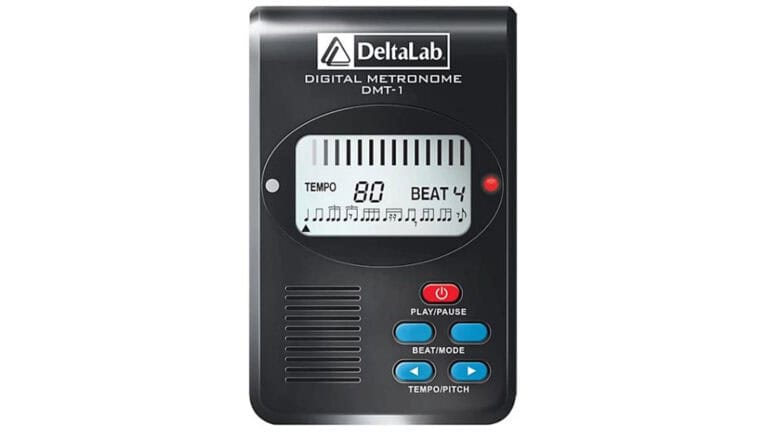
DeltaLab DMT-1
A simple and affordable metronome with multiple modes, a large display, and built-in stand.
Pros
- Large display
- Built-in stand
- Multiple modes
Cons
- There are more advanced metronomes on the market
Buy from
We may earn a commission from these links.
Whether you’re a beginner or advanced guitar player, a metronome is an invaluable practice tool. The DMT-1 is a simple digital metronome that makes a great accessory.
It’s pocket sized and can perform tempos between 30 and 360 BPM. A built-in speaker provides monitoring, and there are up to nine beats per measure to cover whatever time signature you want to practice to.
There are multiple subdivisions from quarter to sixteenth notes and variables for triplets and syncopated beats. It also includes a tone generator for tuning, which is great for ear training.
Soft case (gig bag): Fender FE620 and Gator GBE-Dread
Soft case (gig bag)
Fender FE620 and Gator GBE-Dread
An affordable and convenient way to protect your instrument and store accessories.
Fender FE620
Buy from
Gator GBE-Dread
Buy from
We may earn a commission from these links.
A soft case, often called a gig bag, is the cheapest and lightest case, but the trade-off is that it doesn’t offer quite as much protection as a hard case.
Soft cases are great for those that want something to protect their guitar from scratches and who want to carry their guitar on their back — but if you plan on traveling a lot with your guitar, or want to protect it even more, we recommend looking into a hard case.
Model-wise, for acoustic guitars, we think the Fender FE620, which boasts rubber bumpers and plenty of storage space, is great for electric guitars, while the Gator GBE-DREAD is a great choice for acoustic guitars.
Keep in mind that you may need to double-check that your guitar fits in these cases, especially the acoustic guitar case which is designed for dreadnought-style guitars.
Hardshell case: Gator GWE-Elec
Hardshell case
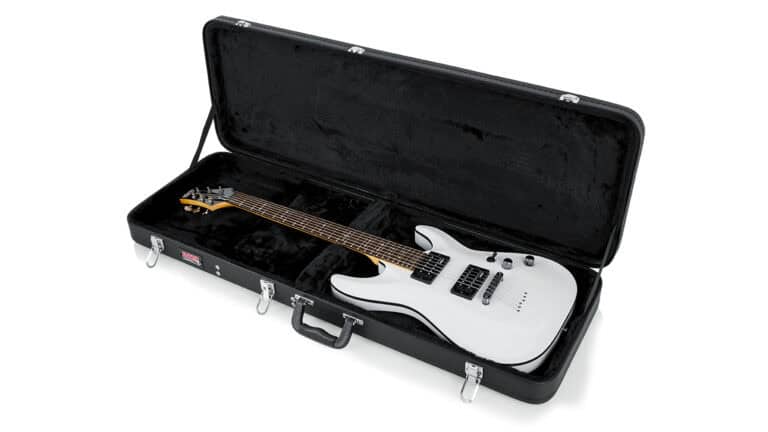
Gator GWE-Elec
The best way to protect your instrument in transport.
Pros
- Durable construction
- Ergonomic handle
- Bottom and side feet for extra protection
- Plush interior with accessory compartment
Cons
- Won't fit every guitar shape
Buy from
We may earn a commission from these links.
If you really want to protect your guitar from all the different bumps and scratches that could come your way, then a hard case is really the way to go.
Hard cases can offer a range of different features, including things like a lock, space for accessories like a tuner, and more. The only problem is, it can sometimes be tough to recommend guitar hard cases, as hard cases are often built for specific models.
Still, we can recommend brands — and we recommend Gator. The GWE-Elec fits most models of electric guitars.
Maintenance kit: Ernie Ball Musician’s Toolkit
Maintenance kit
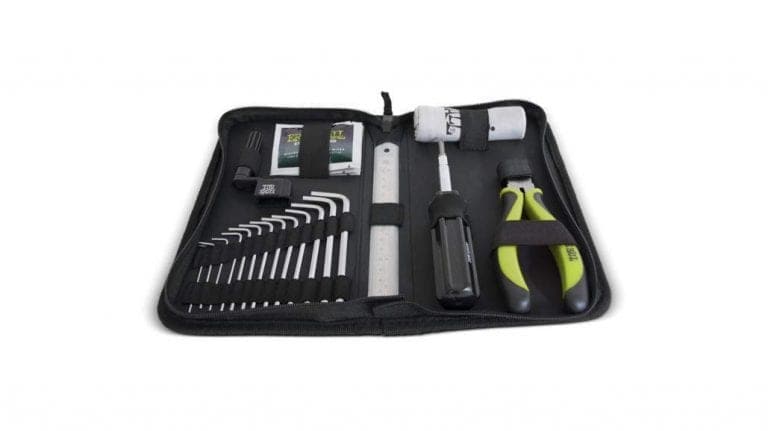
Ernie Ball Musician’s Toolkit
A versatile toolkit for maintaining the quality of your guitar.
Pros
- Includes all necessary maintenance tools
- Comes with zippered case
Cons
- Won't be able to handle more serious repairs
Buy from
We may earn a commission from these links.
You could take excellent care of your guitar, but that doesn’t mean it will escape injury free forever.
In case you do end up having to make a quick repair, it’s worth having a decent guitar maintenance kit, which will include the tools required for things like quick string changes, set ups, cleaning, and more.
For those looking for a guitar maintenance kit, we recommend buying the Ernie Ball Musician’s Tool Kit, which comes with all the tools you’ll need for day-to-day maintenance.
Extra strings: Elixir 80/20 Bronze and Fender Super Bullets
Extra strings
Elixir 80/20 Bronze and Fender Super Bullets
Extra strings always come in handy.
Elixir 80/20 Bronze
Buy from
Fender Super Bullets
Buy from
We may earn a commission from these links.
There should always room for extra strings in your gig bag. After all, you never know when you’re going to break one, and you don’t want to be caught without a spare when that happens.
Thankfully, strings aren’t overly expensive or hard to come by. The strings you get will largely depend on whether you play an acoustic or electric guitar, and even then different types will yield different sound quality and different feels.
In fact, we’ve dedicated an entire guide to buying electric guitar strings, and another dedicated to buying acoustic guitar strings.
Looking for fast recommendations? We think the Elixir 80/20 Bronze strings for acoustic guitarists, and the Fender Super Bullets for electric guitarists.
Having said that, if you’re new to buying strings we also recommend checking out those guides we mentioned and figuring out which ones are right for your needs.
Guitar stand: Hercules GS415B
Guitar stand
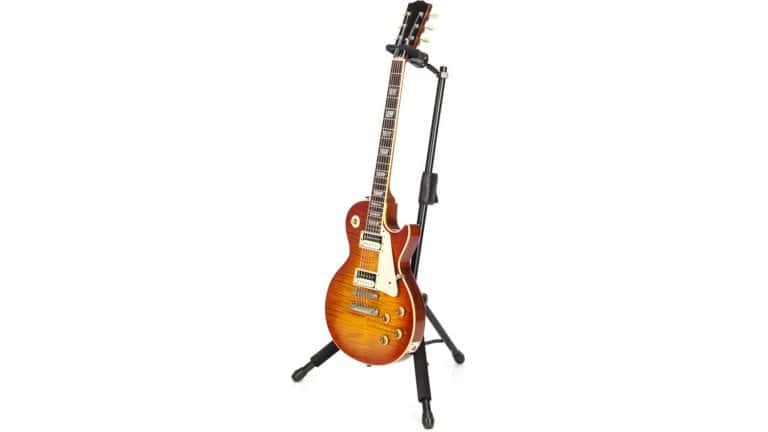
Hercules GS415B
One of the safest and sturdiest stands.
Pros
- Auto grip
- Height adjustable
- Specially formulated foam for extra padding
- Holds up to 33 pounds
Cons
- Takes up significant space if you have multiple guitars
Buy from
We may earn a commission from these links.
A good guitar stand can be seriously helpful for quick and easy access to your guitar, both on stage and when you’re at home. There are dozens of options out there for guitar stands, and some are better than others.
So which guitar stand do we recommend? If you want something sturdy and well-built yet relatively light, then the Hercules GS415B may well be the stand for you. The stand offers a range of great features, including a folding neck that makes it easy to carry.
It’s slightly more expensive than some other guitar stands, but we think that money is well-worth paying.
Strap: Ernie Ball Polypro
Strap
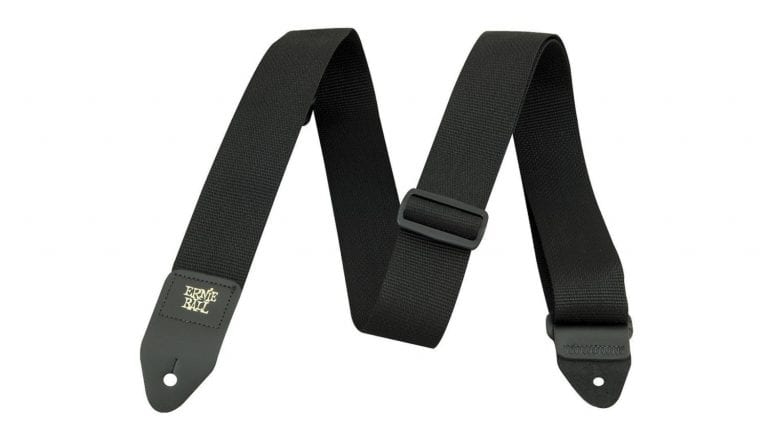
Ernie Ball Polypro
One of the best and most affordable acoustic guitar straps.
Pros
- Durable and comfortable
- Maximum strength
- Length ranges from 41 to 72 inches
Cons
- Only for acoustic guitar
Buy from
We may earn a commission from these links.
Plan on playing your guitar on stage or want to at least pretend that you’re on stage? A good strap will come in handy. A great guitar strap is sturdy and comfortable.
While you could pay a lot of money on a fancy strap with an interesting design, for those simply looking for a reliable strap they can depend on, we recommend the Ernie Ball Polypro acoustic guitar strap.
It’s inexpensive, well made, and should last quite some time — plus it comes in a range of different colors.
Capo: Kyser Quick Change
Capo
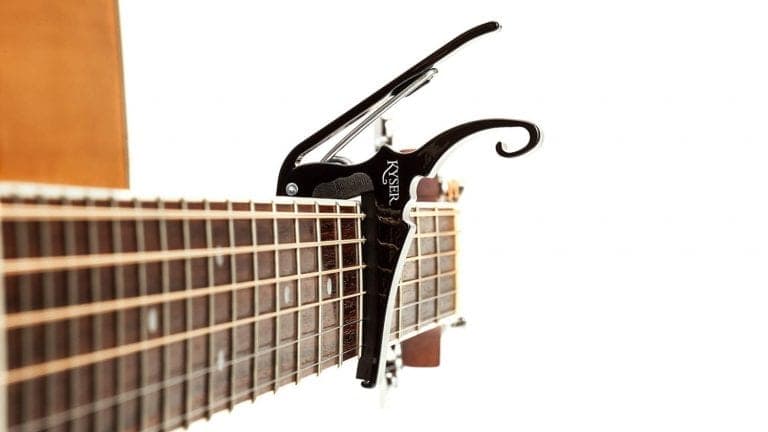
Kyser Quick-Change
One of the easiest capos to use.
Pros
- Easy positioning
- Works for electric and acoustic guitars
- Exerts minimal string tension
Cons
- Can affect intonation
Buy from
We may earn a commission from these links.
A capo is another accessory that’s always handy to have in your guitar case. After all, you never know when that singer is going to ask if you can take things up a few steps, and if you’re not comfortable transposing on the go, then a capo can be gig-saving.
Capos don’t need to bee expensive — they just need to be reliably and firm. It’s important to keep in mind, however, that different guitars might need different capos.
We recommend the Kyser Quick-Change capo for electric and acoustic guitars.
A good cable: Mogami 1/4″ Instrument Cable
A good cable
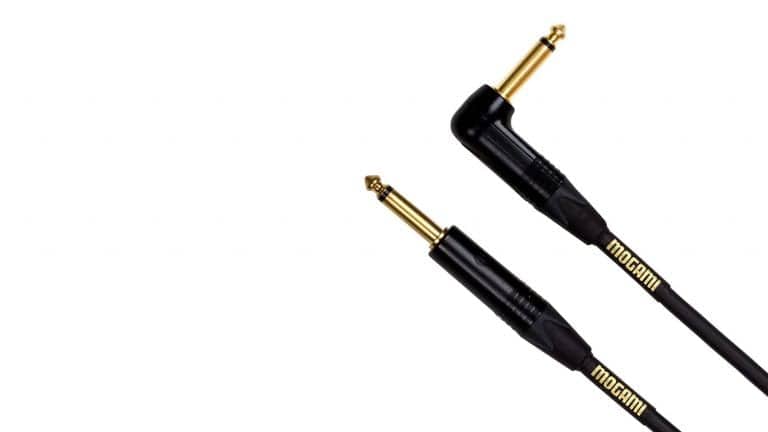
Mogami 1/4″ Instrument Cable
One of the best cable brands comes in a variety of lengths.
Pros
- High quality brand
- Gold connectors provide less interference
- Comes in a variety of lengths
Cons
- More expensive than other cables
Buy from
We may earn a commission from these links.
A good cable can make or break a performance. Bad cables can produce a ton of unwanted noise and hiss, detracting from your performance. That’s why we think it’s worth spending a little extra cash on a cable that is high-quality and that will last for years to come.
When it comes to picking a great model of guitar cable, we recommend the Mogami Gold Instrument Cable.
Pick holder: Dunlop 5005
Pick holder
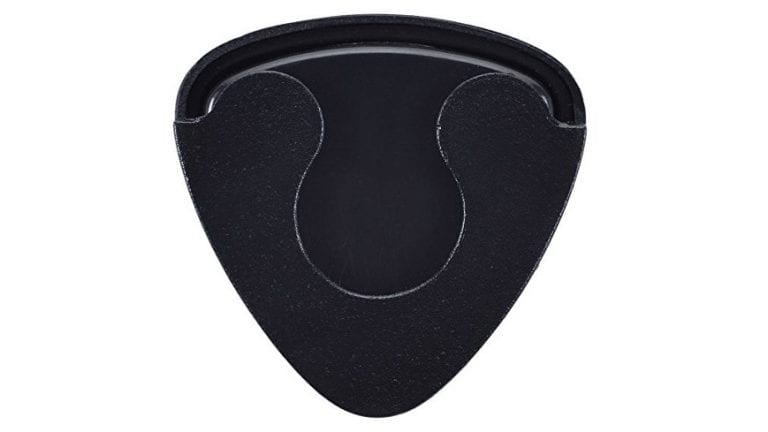
Dunlop 5005
One of the easiest ways to keep extra picks handy.
Pros
- Spring loaded
- Easy access to picks
- Can attach to any surface
Cons
- Some players prefer another method for accessing spare picks
Buy from
We may earn a commission from these links.
Picture this: you’re half way through a guitar solo. The crowd’s cheering. Then you drop your pick. It would take precious seconds to bend over and pick it up again — which would seriously derail the solo.
Instead, you could just reach for your trusty pick holder, grab a new pick, and continue the solo. Pick holders aren’t expensive, and simply attach to your guitar’s body or anywhere else you want quick and easy access.
That’s why we recommend the Dunlop 5005R pick holder.
Humidifier: Music Nomad MN300
Humidifier
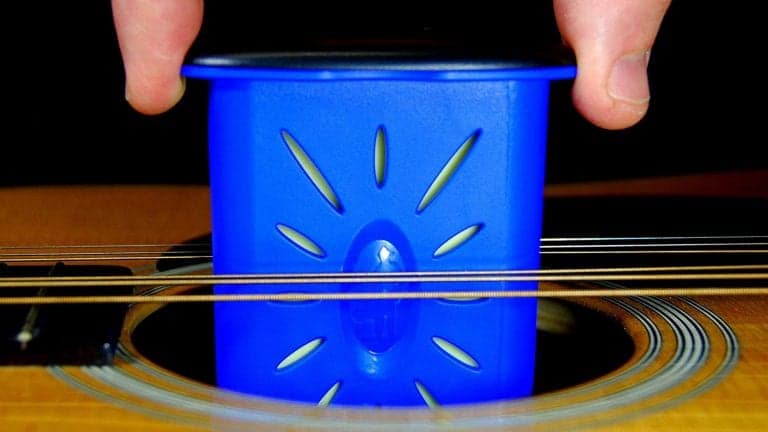
Music Nomad MN300
An affordable way to maintain the moisture in your acoustic guitar.
Pros
- Long lasting and low maintenance
- Doesn't create any mess
- Durable and reusable sponge
- Safely releases moisture
Cons
- Does require some upkeep
Buy from
We may earn a commission from these links.
If you just bought a shiny new guitar, you probably want to take care of it as best as possible — which means ensuring that it exists in an environment that isn’t too dry for the wood that it’s built from.
That’s exactly where a humidifier comes in — as a way to add humidity to the environment that the guitar’s in quickly and easily. Normally, humidifiers are placed inside the guitar case with the guitar — though you could go for much more expensive solutions if you don’t want to keep your guitar in its case.
For an in-case humidifier, however, we recommend the Music Nomad MN300 humidifier for acoustic guitars.
FAQ
What are the must-have accessories for a beginner guitarist?
There are a few accessories every beginner guitarist should have. A tuner, whether it’s a clip-on like a Snark, a standard tuner/metronome, or a pedal tuner. A capo for changing keys, picks, a comfortable strap, and a case or gig bag are the best items to start with.
What types of guitar picks should I use?
The gauge of guitar pick you should use depends on your style and whether you like thin or thick picks. Experiment with different sizes to find the best gauge for you.
Why is a guitar capo useful?
A capo allows you to change the key of a song without altering finger positions. This makes it easier to play songs with tricky chords or accompany singers regardless of their voice register.