Compressor plugins can do some amazing things these days, but there’s still nothing quite like the sound of hardware compressors. As one of the most useful processing tools we have in audio, every model has its own sound and feature set.
These are our favorites across different categories so you can find the best one for your studio setup.
Best hardware compressor overall: Empirical Labs EL8X Distressor
Best hardware compressor overall
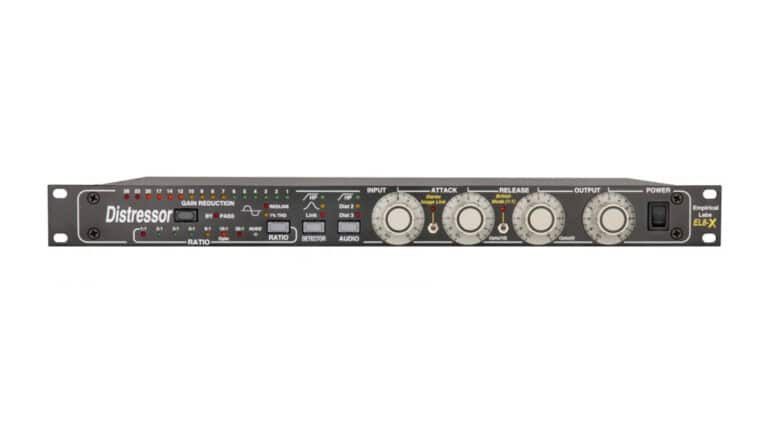
Empirical Labs EL8X Distressor
The most versatile compressor can be as clean or as dirty as you want it to be.
Pros
- British mode adds saturation and color
- Multiple ratios
- Can perform "all buttons in" and Nuke settings
- Accurate gain reduction LED metering
Cons
- Doesn't work on stereo sources
Buy from
We may earn a commission from these links.
First released in 1996, the Distressor is a much newer model than classics like the 1176 or LA-2A. But engineers and producers quickly discovered exactly how versatile this unit is.
The EL8X version adds the distinct sound of British compression via the British Mode switch. Distressors are renowned for being clean and transparent, and with the addition of this extra mode users have the option of adding color and saturation to the signal.
Because of the British addition to the circuit it can pull off the famous “all buttons in” technique from the 1176. Ratio isn’t set with a potentiometer, but with buttons. By pushing them all in at once it produces a completely aggressive, over the top, in-your-face compression that smashes the signal.
There are eight ratio settings that go from 1:1 up to 20:1, with a special Nuke setting that essentially acts as a brickwall limiter. This setting is great for adding punch and aggression to drums and vocals, but is musical enough for any source. Frequency response ranges from 2Hz and 160kHz, and the Attack and Release curves have a very wide spread.
What makes the EL8X Distressor our top pick is that it can be as clean or aggressive as you need it to be.
Best stereo hardware compressor: API 2500+ Stereo Bus Compressor
Best stereo hardware compressor
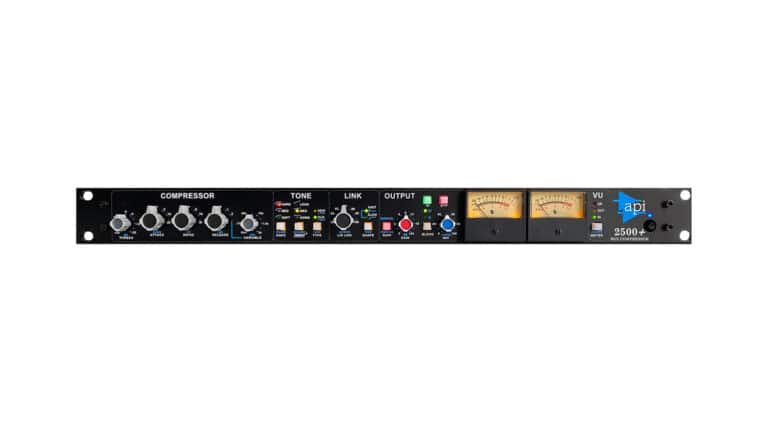
API 2500+ Stereo Bus Compressor
Stereo bus compression with multiple ways to customize performance.
Pros
- Operates in stereo or dual mono
- Mix control can do crossfade or parallel compression
- Feed-forward or feed-back operation
- Thrust filter with 3 sidechain options
- Automatic or variable makeup gain
Cons
- Expensive
- Not best choice if you want to color the signal(s)
Buy from
We may earn a commission from these links.
Stereo compressors have a lot of applications. You can use them on stereo sources like drum overheads, pianos, and multi-mic’d acoustic guitars, or use them for “glue” on the master.
API’s 2500+ is one of the best do-it-all stereo compressors. It offers multiple compression styles, all incredibly musical and usable. An Old/New Tone Type switch selects between traditional feedback or more modern feed-forward modes.
The proprietary Thrust circuit acts as a loudness contour. It gives each octave in the compressed signal equal energy instead of half the energy of the next lowest octave as is normal in hardware compressors.
And the Mix control works very differently than the normal dry/wet setup. It provides the option to either crossfade or parallel mix the wet and dry signals. This isn’t a common feature in compressors, so it takes some experimenting to find the most effective way to use it in your workflow. But the creative options it opens up is impressive.
Other than the hefty price tag there isn’t much not to like about the 2500+. It only takes up one slot in your rack, operates in stereo or dual mono, and gives your tracks all the classic API compression you could want in an outboard compressor.
Best blue stripe 1176 hardware compressor: Black Lion Audio Bluey
Best blue stripe 1176 hardware compressor
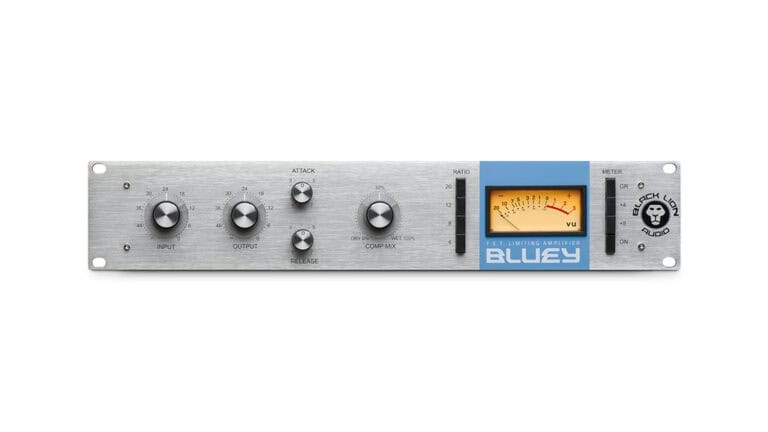
Black Lion Audio Bluey
The Blue Stripe 1176 is one of the best, but they’re expensive and hard to find. This model from mod kings Black Lion Audio lets you add one to your rack in an affordable way.
Pros
- Based on Chris Lord-Alge’s famed Blue Stripe 1176
- Blend knob
- True-to-spec transformer
Cons
- None
Buy from
We may earn a commission from these links.
The 1176 might be the most popular compressor of all time, but the Blue Stripe version is a lot less common. Bluey is a reimagining of mix engineer Chris Lord Alge’s modified Blue Stripe 1176, designed in tandem by Black Lion Audio and the legend himself.
Fully discrete Class A circuitry, through-hole components, polyester caps all reside on a vintage-style 1-side PCB. Transformers are a huge part of a compressor’s sound, and Bluey features a remake of the original’s UTC unit by Cinemag.
Controls are familiar to 1176 users. Input, Output, Attack, Release, and a dry/wet Comp Mix are all here – just remember they operate in reverse on the 1176. There are four ratios selectable via buttons, which means you can pull off the famous “all buttons in” setting and smash your signal.
Original Blue Stripe 1176’s fetch ridiculous prices on the used market, but you can add the renowned sound to your studio for a fraction of the cost with the Bluey.
Best optical hardware compressor: Warm Audio WA-1B
Best optical hardware compressor
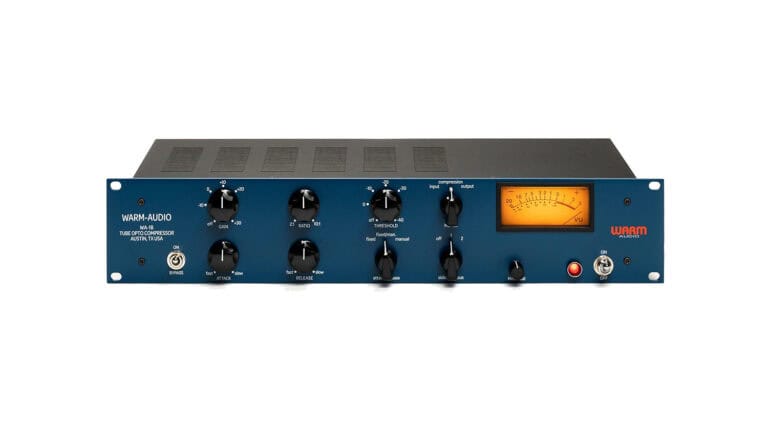
Warm Audio WA-1B
An accurate recreation of the famed Lyndkraft tube-opto compressor.
Pros
- Smooth, natural optical compression
- Identical controls of the Lyndkraft it's based on
- Two different time constant settings
- Handwired circuitry
Cons
- Not best choice for adding color to signal
- Tubes require maintenance
Buy from
We may earn a commission from these links.
Optical compressors were made famous by the Teletronix LA-2A. It’s a distinct style of compression that’s smooth, transparent, and warm. Most aren’t meant to add color to the signal, but some LA-2A plugins have options for it.
A lot of studio rack gear models don’t offer much by way of controls, but the WA-1B from Warm Audio changes that. It’s the company’s take on a Lydkraft-style compressor, and all Warm Audio gear, it’s spot on.
Powered by vacuum tubes it provides the perfect optical hardware compressor sound. Threshold and Ratio the compression curve started. Attack and Release can be switched between Fixed or Manual modes, this lets you use the natural timing of the circuit or specific behavior respectively.
The VU metering is versatile, and you can switch readouts to compression, input and output levels, or bypass it altogether. Like all Warm Audio gear it’s made with high quality components to the specifications of the Lyndkraft.
Optical compression isn’t for every situation. Sometimes you need something fast and in-your-face. But the WA-1B is smooth and musical, and it excels at stacking with more aggressive compressors like an 1176.
Best 500 series hardware compressor: Rupert Neve Designs Portico 543
Best 500 series hardware compressor
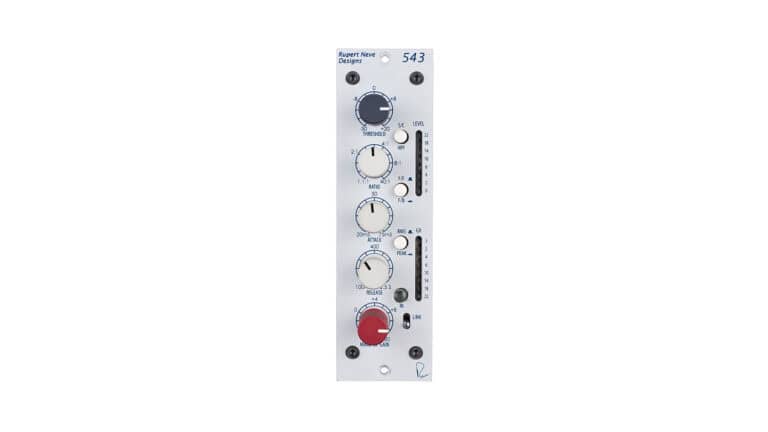
Rupert Neve Designs Portico 543
The timeless Neve sound in a unit that provides smooth compression that can take on any source.
Pros
- Revered Neve sound
- Works well on all sources
- Smooth, natural compression
Cons
- Needs 500 series lunchbox to operate
- May be too colorful for some applications
Buy from
We may earn a commission from these links.
The Portico 543 was our top choice when we explored the best 500 series compressors, and it’s still our favorite.
Neve has always been at the top of the heap when it comes to compression. Their units offer a distinct sound that’s thick and warm. Basically everything you could want from an analog compressor. The only downside is that some find them to provide too much signal coloration and saturation, but that’s the point!
It offers feed-forward and feed-back compression modes, so it’s essentially two compressor topologies in one unit. Controls on the 543 are simple. There is Threshold, Ratio, Attack, Release, and Make-up Gain. A switch changes the metering between RMS and peak, with separate meters to monitor gain reduction and level.
A sidechain circuit introduces a high-pass filter at 250Hz, so the compressor won’t be triggered by frequency content below that. There is a Link switch that lets you use two 543s in tandem for work on stereo sources and buses.
It’s a vibey and versatile compressor with a lot of mojo, and at just $1,000 it’s not exactly a budget compressor, but with it you can put the timeless Neve sound into your 500 series lunchbox at a fraction of the cost of comparable models.
What to look for in a hardware compressor
Understand the character
Not all hardware compressors sound the same, and their sonic character is often the biggest reason engineers choose one over another.
Some compressors are designed to be transparent, reducing dynamic range without noticeably altering the original signal. Others intentionally add harmonic saturation or color.
Before investing in a compressor, consider whether you need a clean, surgical tool for dynamic control or a colorful piece of gear that becomes part of the instrument’s tone.
Many professional studios have several compressor types on hand because they’re useful in different recording and mixing situations.
Match the compression type to the workflow
The circuitry inside a compressor determines how it responds to incoming signal. VCA compressors are known for their speed, precision, and versatility, which makes them excellent for drums, buses, and live sound.
FET compressors deliver aggressive, punchy compression that adds energy to vocals, guitars, and percussion. Optical compressors provide smooth, natural gain reduction with slower attack and release characteristics, making them favorites for vocals and bass. Variable-mu compressors use vacuum tubes to create rich, musical compression that shines on stereo mixes.
Balance price with value
Professional hardware compressors are available across a range of price points, but the most expensive option isn’t always the best choice for every studio.
Consider how often you’ll use it, the types of projects you record, and whether its sonic character fills a gap in your current gear collection. A versatile compressor that performs well in multiple scenarios offers better long-term value than a highly specialized unit.
FAQ
What is a hardware compressor and why use one over a plugin?
A hardware compressor is an outboard unit, usually a studio rack mount effect, that controls the dynamic range of audio signals. Though modern compressor plugins are sophisticated, hardware models add analog warmth, character, and subtle saturation that a lot of people feel is difficult to replicate digitally.
Is investing in a hardware compressor worth it for a home studio?
It depends on what you want to do. If you’re aiming for professional-level mixes and want the sound and tactile feel of analog gear, they’re a worthwhile investment. But plugins have come a long way and may be sufficient for most home and project studios.
How do you maintain a hardware compressor?
Keep it clean from dust, don’t let it overheat, and occasionally check for component wear, especially tubes and power supplies.
Tube compressors may need new tubes every few years depending on how much it’s used and how well you take care of it.
Rackmount compressors should be powered through surge protectors or power conditioners to avoid unwanted power spikes as well as noise and interference.