Few effects in guitar history are as iconic, or as unruly, as fuzz pedals. Created in the 1960s, it is one of the very first guitar pedals ever. The design redefined what an electric guitar could sound like. Instead of the natural breakup of an amp, it delivered a raw, saturated tone that was thick, gritty, and impossible to ignore.
Early pioneers like Keith Richards, Jimi Hendrix, and Jimmy Page used fuzz to fuel rock’s evolution, and players like Billy Corgan, Jack White, and Dan Auerbach carried its wild spirit into new generations. From psychedelic soundscapes to grunge anthems and stoner rock riffs, fuzz remains a go-to pedal for guitarists.
In this guide, we’ll explore the best fuzz pedals available today, highlight what makes them unique, and help you find the perfect model for your style.
Best fuzz pedal overall: Electro-Harmonix Big Muff Pi
Best fuzz pedal overall
Electro-Harmonix Big Muff Pi
An original for a reason.
Pros
- Multiple circuit variations
- Unique sustain control
Cons
- Large enclosure
Buy from
We may earn a commission from these links.

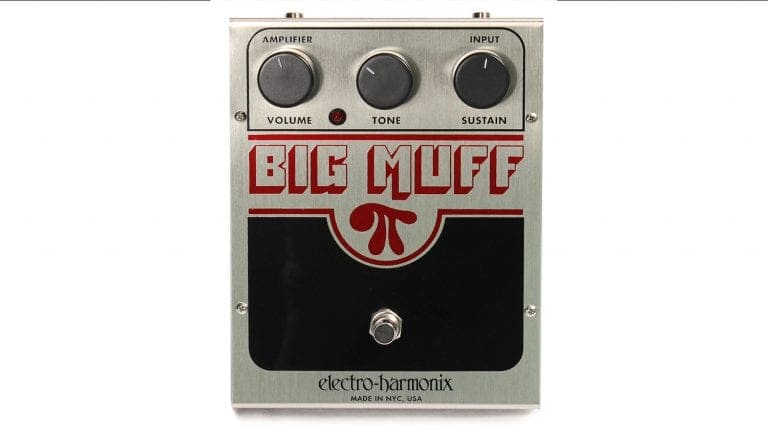
Every guitar player has heard of the Big Muff. Originally released in 1969, it’s been one of the go-to fuzz pedals for over half a century. Marketed as a “distortion/sustainer” it provides a singing kind of fuzz that isn’t just square wave mayhem.
The most interesting aspect of the control set includes the Sustain knob. It essentially functions as a gain, and increasing it does just that but also adds more sustain to the signal without getting too stepped on by clipping. Tone has a wide EQ spectrum, from warm bass to defined treble.
One of the best things about the Big Muff is there are multiple variations that all offer something fresh. There is a version with a circuit built around an op-amp instead of a transistor, the Ram’s Head, Green Russian, Triangle, and Deluxe, which offers a robust control set in a larger format.
Best traditional fuzz pedal: Dunlop Fuzz Face
Best traditional fuzz pedal
Dunlop Fuzz Face
Another legend from the early days of fuzz.
Pros
- Original germanium PNP transistor design
- Built to vintage specs
- Simple controls
Cons
- Only takes battery power
Buy from
We may earn a commission from these links.
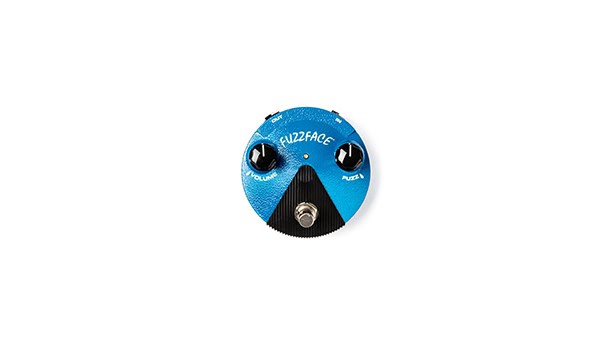
Another of the original fuzz pedals, the Fuzz Face has an impressive roster of users including Jimi Hendrix, Stevie Ray Vaughan, David Gilmour, the list just goes on. And what could be more identifiable than the circular enclosure?
It’s a simple transistor-based fuzz pedal based around the Germanium PNP transistor. Dunlop’s version is a faithful recreation to the original vintage specs. Just two knobs, Fuzz and Volume, dial in the sound so there’s no overthinking involved.
Aside from its iconic sound, it does have a few downsides. The enclosure is large, but luckily there’s a mini version too. It also doesn’t take mains power, so it needs to run on a 9v battery.
Best boutique fuzz pedal: Keeley Fuzz Bender
Best boutique fuzz pedal
Keeley Fuzz Bender
A boutique fuzz with an innovative circuit.
Pros
- Hybrid silicon and germanium design
- Up to 20dB of boost/cut with active EQ section
- True bypass
Cons
- Best for modern sounds
Buy from
We may earn a commission from these links.
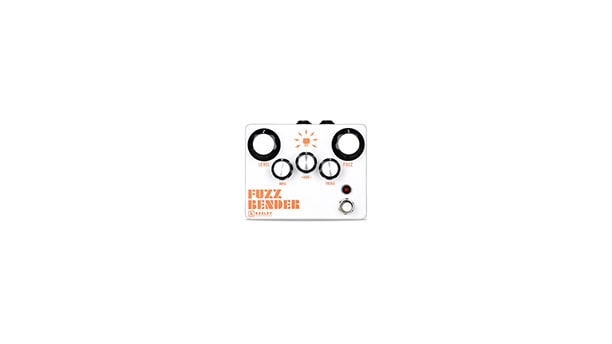
Because fuzz pedals are such simple circuits, they’re a great platform for boutique builders to put their own spin on the idea. The Fuzz Bender uses three transistors that combine the best of both fuzz worlds – germanium and silicon.
Vintage Japanese germanium transistors are the secret sauce that create such a massive wall of fuzz. Bias controls the note attack and decay, and access sounds from familiar thick square waves, to more articulate, modern sounds, and glitched-out mayhem.
An active EQ section uses two gyrators that let you create larger-than-life fuzz tones most fuzz pedals just can’t do. The dual knobs offer more than 20dB of boost or cut at 100Hz and 10kHz frequency points.
It’s not the most advanced boutique fuzz pedal, but there are a lot of sounds on deck. It’s great for guitar or bass guitar, and at just $149 the price is right.
Best digital fuzz pedal: Source Audio Kingmaker
Best digital fuzz pedal
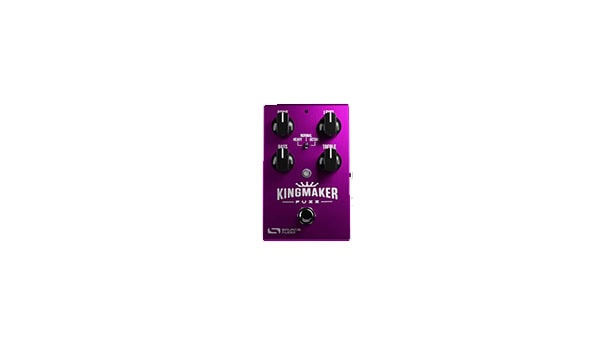
Source Audio Kingmaker
Hands down the best digital fuzz pedal.
Pros
- 3 onboard fuzz settings cover tonal bases
- Neuro Editor offers expansive options
- Stereo I/O
- Switchable bypass modes
Cons
- Dialing in complex sounds can be time consuming
Buy from
We may earn a commission from these links.
It’s nothing short of amazing how many options Source Audio’s DSP engines fit in standard-sized enclosures. The base circuit is made up of three fuzz engines that stand on their own, but the power of this digital powerhouse is in the Neuro Mobile App.
Free for Android and iOS it provides access to a world of fuzz, overdrive, and distortion sounds. There are also extended parametric EQ and stereo routing options as well as internal stacking functions.
External, real-time control is possible through Source Audio expression pedals, a tap tempo switch, or the Hot Hand 3 Universal Wireless Effects controller.
The Kingmaker is the result of eight years of studying classic clipping tones paired with next-generation digital signal processing that creates a complete creative fuzz workstation.
Best budget fuzz pedal: JHS Pedals 3 Series Fuzz
Best budget fuzz pedal
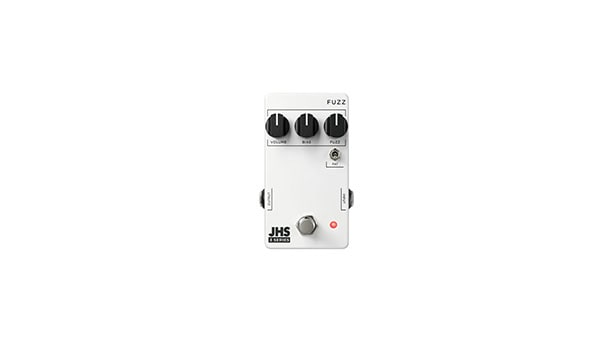
JHS Pedals 3 Series Fuzz
Simple, powerful, affordable.
Pros
- Easy to dial in
- Good range of fuzz sounds
- Fat switch adds low end boost
Cons
- Not as many ways to dial it in as other options
Buy from
We may earn a commission from these links.
At a great combination of tone and value the 3 Series Fuzz is a well-rounded budget fuzz pedal that works well with the guitar’s volume knob. The circuit is a great mix of vintage and modern sounds, and has an articulate tone profile.
Like many fuzz pedals, the Bias control is the gatekeeper for the flavor of fuzz. The Fuzz control works across its entire range and even gets the pedal into distortion territory. A Fat toggle switch adds in a low end boost for a thicker, more powerful sound that works in conjunction with the other controls to offer a range of sounds in such an affordable pedal.
It’s got the JHS quality everyone expects from their products, and the durable construction can withstand years of use.
FAQ
What makes a fuzz pedal different from distortion or overdrive?
Fuzz pedals produce a saturated, compressed tone that’s raw and aggressive, unlike the natural breakup of overdrive or the tighter clipping of distortion. It’s a dirt pedal with a sound all its own. The reason for this is that fuzz pedals use hard clipping and overdrives use soft clipping.
Are germanium or silicon fuzz pedals better?
Germanium fuzz pedals offer warmer, vintage tones but can be sensitive to temperature. Silicon fuzz pedals are brighter, more stable, and deliver a sharper edge. Your choice depends on whether you want a classic fuzz sound or more modern tones.
Do fuzz pedals work well with humbuckers and single-coils?
Yes, but the response is different. Single-coil pickups often provide clearer note separation with fuzz, while humbuckers create a thicker, heavier wall of sound. Experiment with both to find what works best for your signal chain.
Can fuzz pedals be used for bass guitar too?
Absolutely. Many fuzz pedals pair well with bass guitar and deliver growling, powerful low-end tones. There are specific bass fuzz models that preserve low end frequencies.