Amp modeling technology has made some huge forward bounds over the past few years. As more and more artists of all calibers move to units like the Axe-FX, Kemper, and other companies are challenged to remain on the cutting edge when it comes to sounds and features.
“Next-generation” might seem like a vague term, so we’re looking at units that are innovative and progressive while providing stellar amp sounds. So if a unit has great effects but weak amp modeling – or vice versa – it didn’t make the cut.
Most of these carry a pretty hefty price tag, but the rich feature sets and versatility they provide help to offset that.
Here are our top picks for the best next-generation guitar amp modelers.
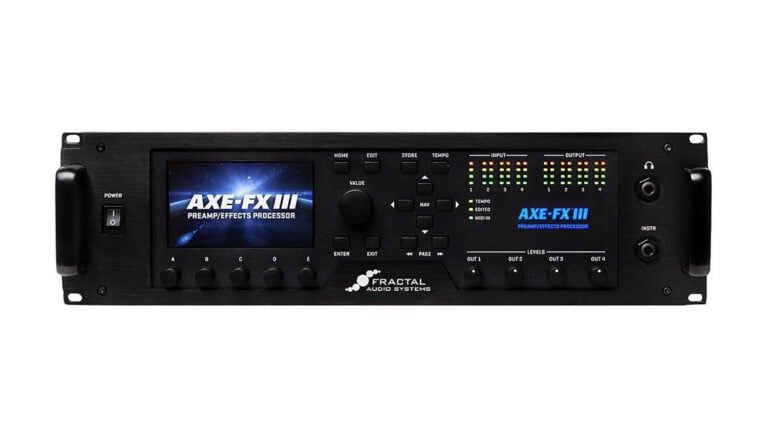
Best overall: Fractal Audio Axe-Fx III
Best overall
Fractal Audio Axe-Fx III
The gold standard for amp modeling.
Pros
- Front panel LED I/O monitoring
- Sleek front panel allows for quick entry
- Flexible I/O and routing
- High-quality circuit components
Cons
- Steep learning curve
- Expensive
Buy from
We may earn a commission from these links.
Fractal Audio is one of the premier trailblazers of modern guitar amp and cab modeling. The 3rd generation Axe-FX builds on the stellar reputation of the previous entries in the series.
The DSP audio engine has been revamped, and the video engine runs separately to free up processing power for the audio. It’s pretty much set the standard for amp modeling, and the Ultra-res speaker cab simulations number in the thousands.
It’s got a new display that’s easier to see no matter the lighting or angle you’re at. An insane amount of I/O means that there is no situation the unit can rise to. The routing within the unit is just as flexible.
It can store up to 1024 presets, try cycling through all that during a set! It’s certainly pricey, but the engine under this hood is worth every penny.
Most unique: Kemper Profiler Rack MK2
Most unique
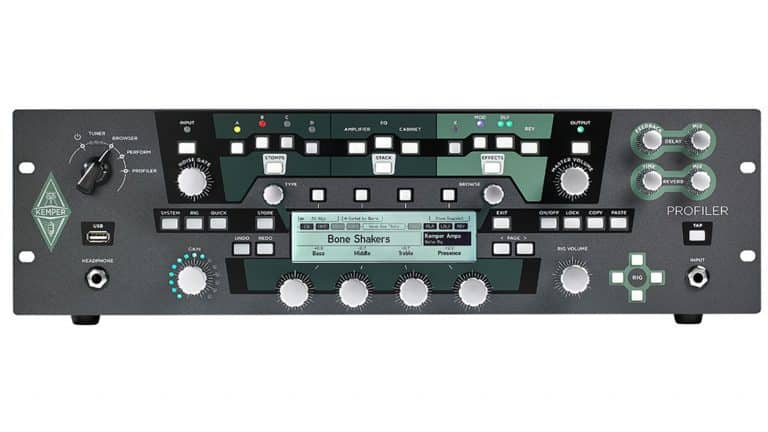
Kemper Profiler Rack MK2
Model analog amps and create digital profiles of them to use anywhere.
Pros
- Can capture analog amps and create digital models
- Rig Exchange database for sharing settings
- Robust I/O
Cons
- Steep learning curve
- Best used for modeling real amps, not for users looking for an onboard library
Buy from
We may earn a commission from these links.
The Kemper works a little differently than most of the other more advanced guitar amp modelers. It includes a wealth of emulations of vintage and modern amps.
But the real appeal here is being able to use a reference amp to create sounds all your own. And it’s not just the heads that can be profiled, but also the speaker cab and mics used to record it.
There is also a lively community that shares its own patches, and you are able to load these patches into your own Kemper. The Profiler comes in a few versions, from an all-inclusive floor unit to a head and rack unit.
There’s a reason that a lot of the pros have moved to these.
Most versatile: Line 6 Helix LT
Most versatile
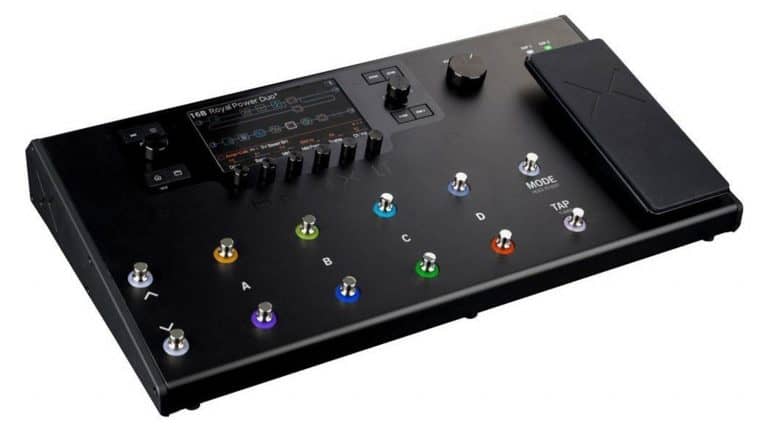
Line 6 Helix LT
A floor unit that runs on Line 6’s powerful HX Modeling DSP engine.
Pros
- Same HX Modeling as other units
- 123dB of dynamic range
- Powerful DSP engine
- Flexible I/O for integration into any setup
- PC/Mac editor
Cons
- Footswitches are close together
- Setting up sounds can be time consuming
Buy from
We may earn a commission from these links.
It’s proven itself to be popular with guitarists of all levels. With 62 amps and 37 cabinet choices, you have endless tonal combinations with the Line 6 Helix LT. It also offers models of 16 microphones with variable positioning.
Dual-DSP SCHARC processing and HX Modeling technology recreate every amp sound with the highest fidelity. You also get access to the Helix Native plug-in so you can bypass the floor unit and go directly into a recording interface.
It comes in a rack unit as well as large and small floor units. They all have different levels of features, but the sounds carry across each tier. Dual expression pedal inputs let you control parameters on the fly.
Analog and digital I/O make it easy to throw anywhere into your rig or recording setup.
Best floor amp modeler: HeadRush Flex Prime
Best floor amp modeler
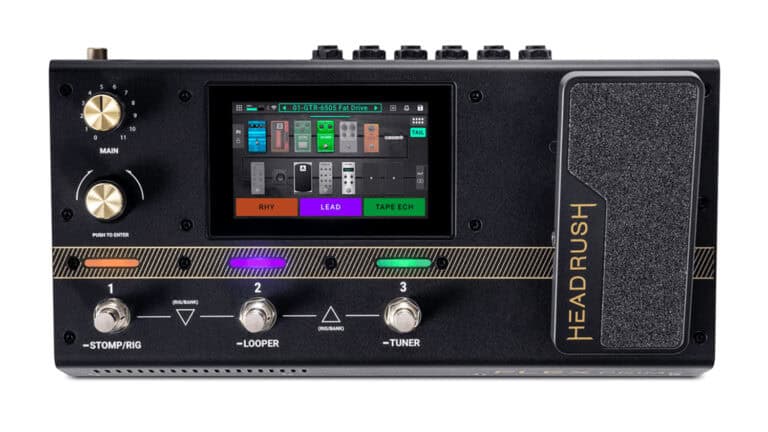
HeadRush Flex Prime
An all-in-one floor unit with realistic modeling and versatile I/O.
Pros
- Works for guitar and bass
- Touchscreen provides intuitive control over settings
- Realistic modeling
- Can load third party models
- Versatile I/O
Cons
- Physical controls could be better
- Difficult to change settings on the fly
Buy from
We may earn a commission from these links.
HeadRush is one of the newer companies to the modeling world, but they’ve quickly carved out their own market share. Prime is their all inclusive floor modeler that combines amps, cabinets, and effects for guitar and bass.
A 4″ touchscreen lets you assemble your dream rigs, and the powerful DSP engine connects you to some of the best modeling available. But that’s just the start.
The I/O includes WiFi with Dropbox integration, and a web-based editor for quick settings editing from a PC, Mac, or mobile device. Three assignable footswitches give you control over preset changes, tap tempo, and more.
Whether you’re editing on the unit or through the cloud, using included sounds or loading your own, or creating your own presets or downloading them from the HeadRush Cloud this is one of the best amp modeler floor units around.
Most economical: Strymon Iridium
Most economical
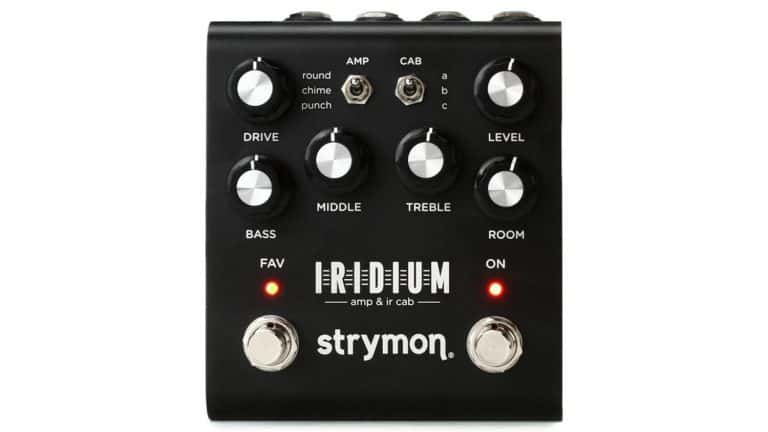
Strymon Iridium
A pedalboard friendly unit with essential amp sounds.
Pros
- Wide range of amp models with specific IRs
- Hybrid analog/digital circuit
- Up to 22dB of analog gain
- Fits nicely into a pedalboard signal chain
Cons
- Not as many sounds as other modelers
Buy from
We may earn a commission from these links.
If you’re looking at guitar amp modelers that are much more affordable, and with an easier learning curve, you’ve found it. Through Strymon’s Matrix Modeling Technology, it includes three tube amp models running through a hybrid analog/digital signal path.
These include classic combo guitar amps like the Vox AC30, Fender Tweed, and a Marshall. The JFET preamp allows the pedal to respond more like a tube amp. 2-stage DSP processing emulates the characteristics that give tubes their magic.
There are nine 24-bit/96kHz included speaker cabs from Celestion and OwnHammer, and you can import your own mono or stereo IRs via the USB port. There is stereo I/O and room reverb.
You can even use an expression pedal for volume swells! For the player looking for an easy-to-use and pedalboard-friendly unit – look no further.
Best for live performance: BOSS GT-1000
Best for live performance
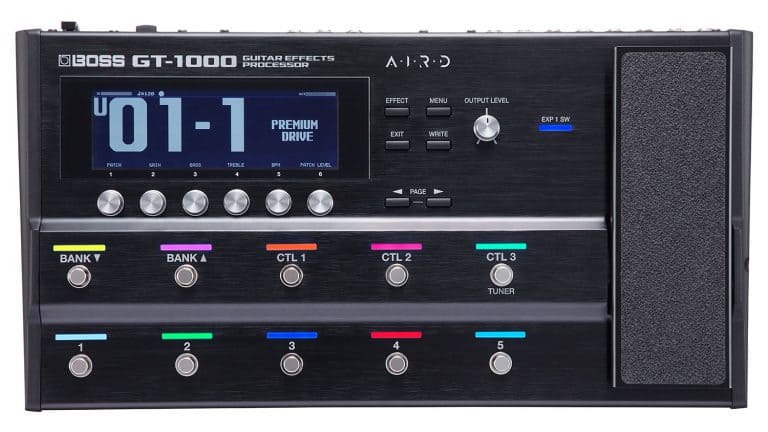
Boss GT-1000
A high quality amp modeler designed for live performance – whether going direct or using it with an amp.
Pros
- Models built on BOSS' Tube Logic design
- Works well with external amplifiers
- Amp, cab, and effects models
- Good routing options
Cons
- None
Buy from
We may earn a commission from these links.
Using BOSS’ custom DSP, this is first guitar multi-effect with 32-bit conversion and 32-bit/96kHz internal processing.
Just like in their Katana, Waza, and Blues Cube products the GT-1000 runs on the Tube Logic design approach run the “preamp” section, with advanced impulse responses driving the “cabinets”. Ten assignable switches and wireless editing via mobile app let you design the perfect set up.
The learning curve can be a bit steep, but with this amount of customization available that’s to be expected.
Best amp modeler for bass guitar: IK Multimedia TONEX Bass Edition
Best amp modeler for bass guitar
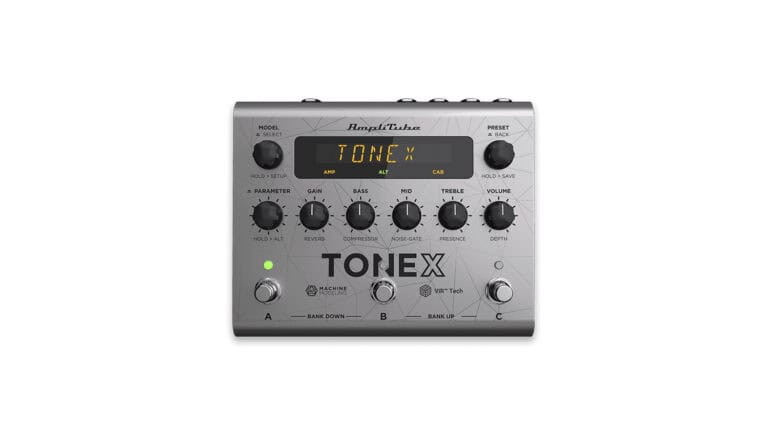
IK Multimedia TONEX Bass Edition
A floor unit for bass guitar with a wealth of sounds and editing options.
Pros
- 150 tone models over 50 banks
- Phase-correct DI
- Good cabinet options
- Over 1,000 premium sounds through TONE MAX and ToneNET
Cons
- None
Buy from
We may earn a commission from these links.
Bass players deserve access to great models too, and IK Multimedia’s TONEX is a great choice. It’s a stompbox floor unit that blends the best of 24-bit/192kHz digital sound with tactile controls.
It ships with 150 presets across 50 settings banks with three variations each. From the warm and fat sounds of legendary 60’s bass sounds to modern grind every setting is bolstered by AI-driven modeling that provides realistic dynamics and response.
In addition to the amp modeling there are 15 effects, cabinet, and mic simulations. The IR loader lets you use custom impulse responses. Effects can be arrange over seven blocks pre or post-amplifier, which allows for a lot of tone experimentation.
What to look for in an amp modeler
Realistic modeling
The most important factor in any guitar amp modeler is how accurately it recreates the sound and feel of analog amplifiers and speaker cabinets.
High-quality modelers capture not only the tone of classic amps but also the dynamic response. Look for modelers that include detailed cabinet simulations and impulse response support.
This allows you to recreate the sound of different speaker types and mic placements. A convincing amp model should feel responsive and natural.
Ease of use and interface design
Even the most powerful amp modeler can become frustrating if it’s difficult to navigate. A well-designed interface makes dialing in tones much faster. Look for units that allow you to quickly tweak core parameters like gain, EQ, and cabinet settings without digging through complex menus.
Preset management and signal-chain visualization can also make a big difference when building or modifying patches.
Connectivity and integration
Modern amp modelers often serve as the centerpiece of a digital rig, so connectivity matters. Many devices double as USB audio interfaces for recording directly into a DAW, which can simplify your home recording studio setup.
You may also want features like stereo outputs, effects loops for external pedals, MIDI support, or headphone outputs for silent practice. The right connections ensure the modeler works seamlessly in live performance, studio recording, or practice environments.
FAQ
What is a guitar amp modeler?
They’re digital amps that emulate analog amplifiers. Most are built on high-quality DSP engines and include a number of amplifier, cabinet, and effects models. Some even include microphones and room sounds.
Are there amp modelers for bass guitar?
Yes. A lot of amp modelers include emulations for bass guitar.
Do I need a computer to use an amp modeler?
Not necessarily. Some modelers require a computer for initial setup and firmware updates, most are standalone devices. Some also feature mobile apps for additional control.