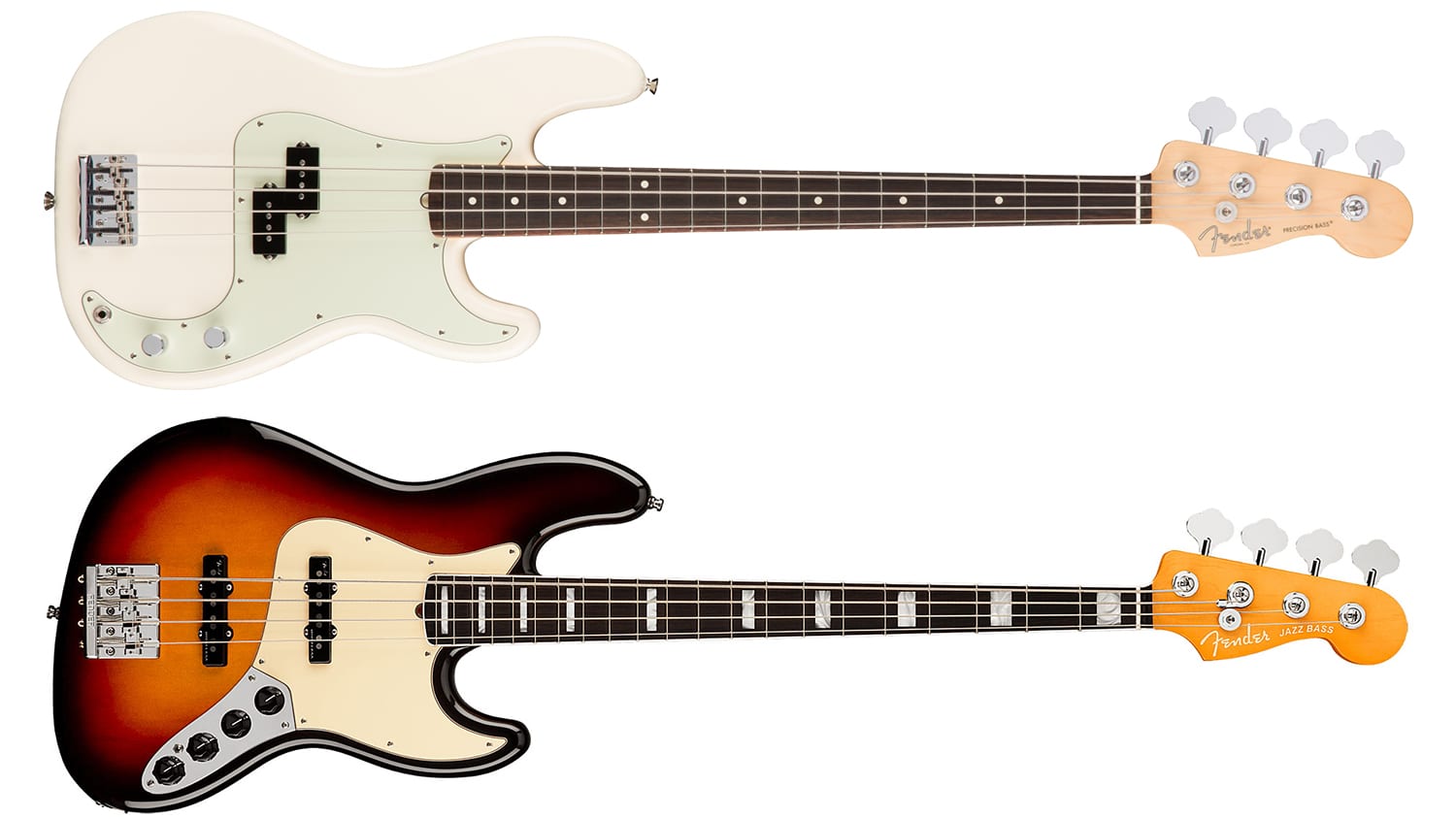
Across all styles of music, the iconic duo of bass guitars that Fender introduced in the early days of modern music are the gold standard for bass tones. Bass players are often faced with the dilemma over which model is the best for them when it comes to the Jazz vs. Precision bass.
While they do have similarities, there are some key differences in features and tones in the Precision vs. Jazz bass debate. This article breaks down the fundamental differences between the two so that you can choose the one that best fits you and your style.
Music History is Made
As the electric guitar became more and more popular, standup bass players were in need of something that could compete with them in volume.
So, in 1951 Fender rolled out the Precision bass. It was so groundbreaking that the design really hasn’t changed much since its inception. The Precision moniker descended from the fact that the electric bass had frets, whereas the standup basses that it was meant to replace did not. Therefore, it made it easier to hit specific notes.
A little less than a decade later the Jazz bass was introduced. Released in 1960, it was designed in spirit and appearance to be a complement to the Jazzmaster guitars which came out two years earlier.
With these two trailblazing designs the music world would never be the same. Let’s get in to the differences between the two models.
Body Styles

The body of the Precision bass is a double cut that resembles the Stratocaster, while the Jazz bass has an offset body more similar to the Jaguar and Jazzmaster lines.
Precision bodies are thicker, while Jazz bodies are slimmer. Both bodies have contours that make them as comfortable as possible to play.
Neck and Neck
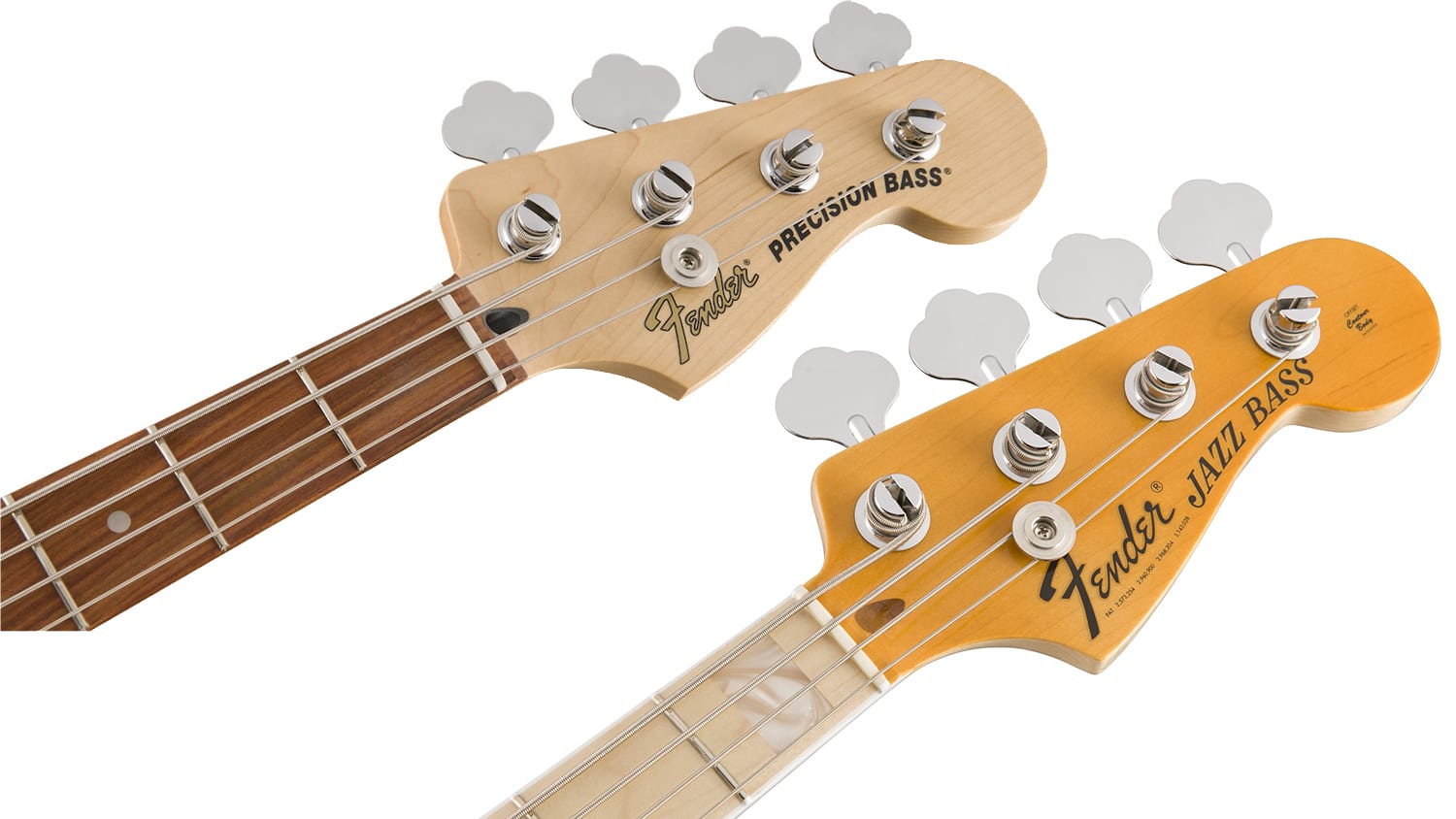
Most modern iterations for both models feature a “C” neck shape. But they differ in a crucial way – the neck differential.
A Precision bass neck is thicker and generally maintains pretty much the same width along its length. But it has a subtle taper toward the headstock. The thicker Precision neck provides the characteristic rock tone that has made countless recordings.
On the other hand, the Jazz neck is a bit more ergonomic. It has a much more obvious taper toward the nut with the strings closer together. This is one of the reasons why Jazz basses are favored by funk, jazz, and reggae players that like to make fast changes.
Pickup Configuration
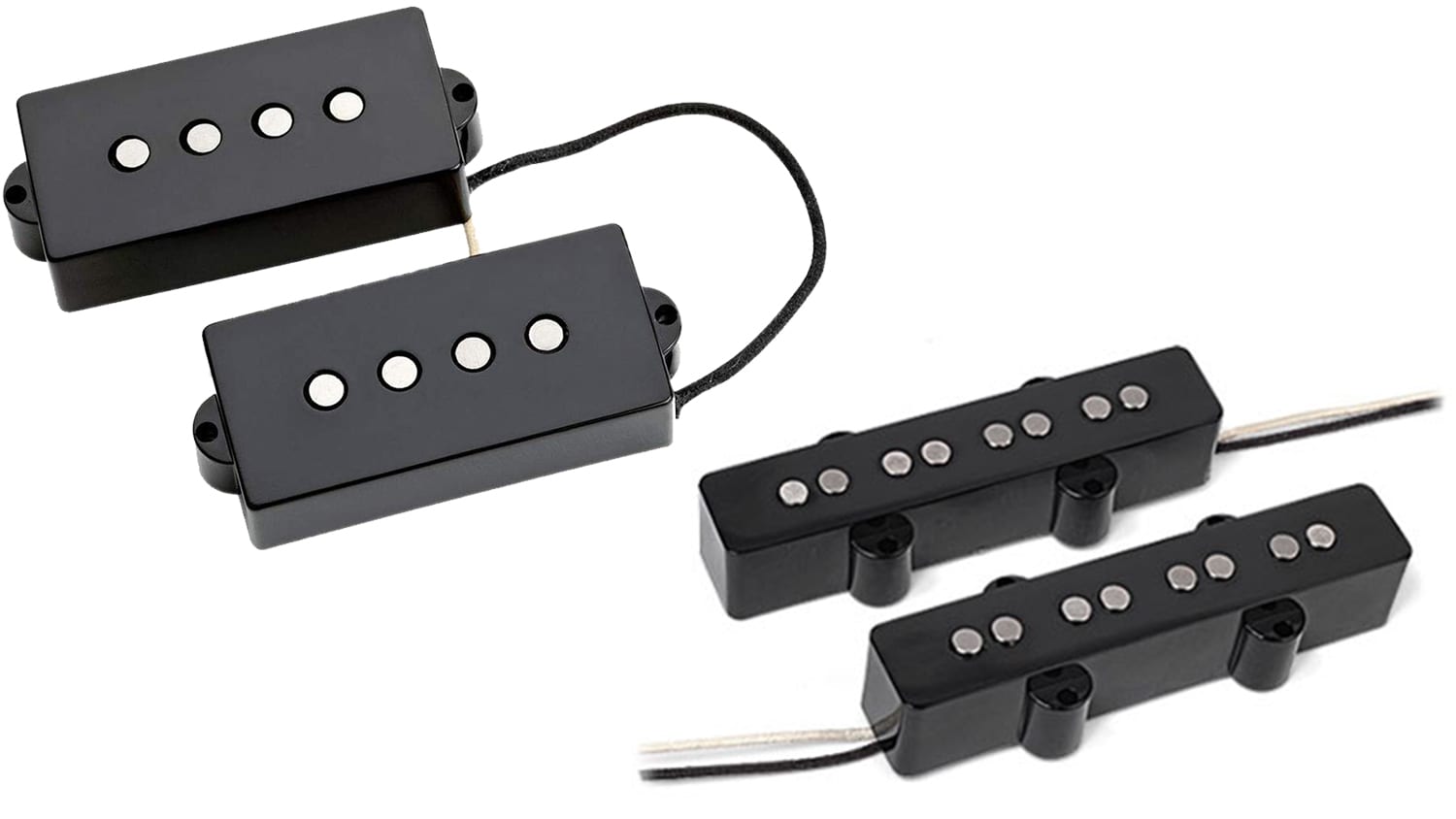
Another significant difference between the two designs is in the pickups. The traditional design for a Precision bass uses a split-coil pickup staggered to reproduce the meat of the midrange with the cut of the higher strings.
For the best of both worlds there is a model of Precision bass called the “PJ” that has the split-coil in the middle position and a Jazz pickup at the bridge. With a volume control for each pickup you can blend the sound however you’d like to get the thump of the middle pickup with the top end of the bridge.
The Jazz design features dual single-coils with two polepieces for each string. Doubling up like this allows for a brighter and more pronounced midrange and high end. This configuration allows the sound to cut and provides further tonal flexibility with separate volume controls.
There are now many different variations of Precision and Jazz basses on the market to appeal to any preference. You can find P-basses with the hallmark Jazz pickups, J-basses with the split-coil design and everything in between.
Popular models
Both the Fender Jazz Bass and Fender Precision Bass are available in a range of different models, and apart from price, they can have slightly different build qualities and features.
Here’s a quick rundown of some of the more popular models for each.
Best premium Jazz bass: Fender American Ultra II
Best premium Jazz bass
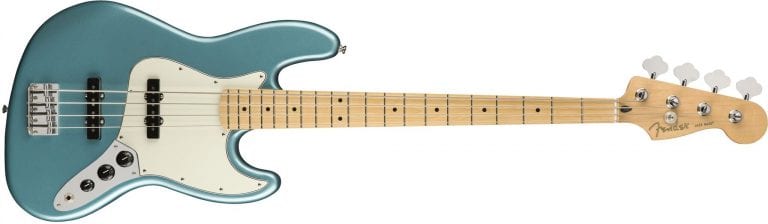
Fender American Ultra II Jazz Bass
One of the most versatile Jazz bass guitars on the market.
Pros
- D-profile neck is easy to play
- Ultra II noiseless pickups
- Tone control with additional midrange boost/cut
Cons
- Neck needs to be removed to adjust truss rod
Buy from
We may earn a commission from these links.

One of the best Jazz basses on the market, the American Ultra II is made of a select, gloss finished alder body and a quarter-sawn maple D-profile neck.
The electronics include a duo of Ultra II Noiseless Vintage pickups and a pan pot to select between them. There’s a great amount of EQ options, including a stacked concentric midrange and treble boost/cut as well as a passive tone control.
It’s a great bass that anyone looking for the Jazz bass sound will keep in their collection for quite a while. The only real downside is that you have to remove the neck to adjust the truss rod, but that’s a relatively minor inconvenience.
Best midrange Jazz bass: Fender Player II Jazz Bass
Best midrange Jazz bass
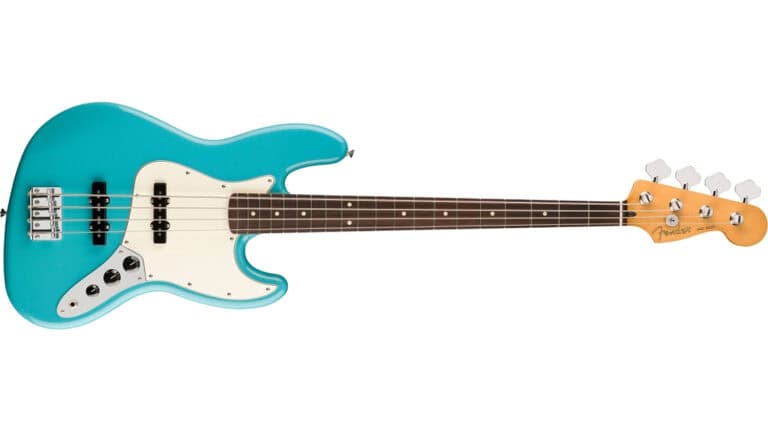
Fender Player II Jazz Bass
The perfect middle-of-the-road Jazz bass model.
Pros
- C-shape neck for fast playability
- Vintage-style tuners and string tree
- Bone nut for better intonation
- Pickups have a good frequency range
Cons
- None
Buy from
We may earn a commission from these links.
If you’re looking for the best midrange Jazz bass – you’ve found it. The Player II combines vintage and modern with an alder body and maple modern C-shape neck.
One of the most appealing factors is the marriage of vintage and modern appointments, like the open-gear tuners and vintage-style disc string tree.
It doesn’t offer any fancy or crazy features, but that’s the beauty in it. Sleek, to the point. A Jazz bass for those that just want to plug in and play.
Best budget Jazz bass: Squier Classic Vibe 70s Jazz Bass
Best budget Jazz bass
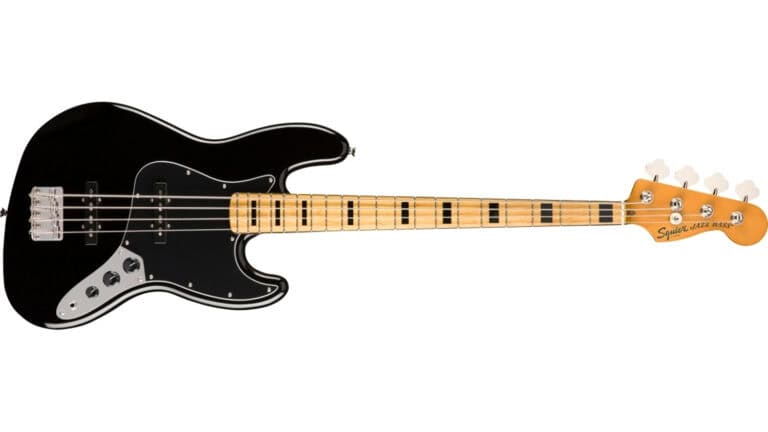
Squier Classic Vibe ’70s Jazz Bass
A budget Jazz bass option crafted with quality.
Pros
- Comfortable C-shape neck
- Easy to play Narrow Tall frets
- Vintage-style bridge and tuners
Cons
- Some bassists may not prefer maple neck
Buy from
We may earn a commission from these links.
Squier quality has really come a long way in recent years, and this Jazz model is evidence of that. It’s got a lightweight poplar body with a maple, C-profile neck.
Narrow Tall frets add to playability, and the Fender Designed singlecoil pickups provide the classic Jazz bass sound. Vintage-style tuners and a 4-saddle bridge add some classic flair.
Best Precision Bass overall: Fender American Professional II
Best Precision Bass overall
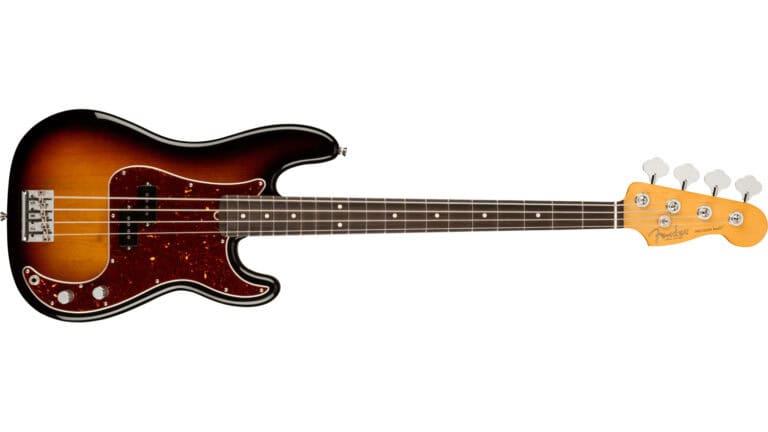
Fender American Professional II Precision Bass
The perfect mix of sound and style.
Pros
- Rolled fingerboard edges
- V-Mod II split-coil pickup
- HiMass Vintage bridge for additional tuning stability
- Bone nut for spot-on intonation
Cons
- None
Buy from
We may earn a commission from these links.
What’s not to love about this homage to the first mass-produced electric bass guitar? It’s got a comfortable contoured body, ’63 C-profile neck, and a fretboard with rolled edges for added playing comfort, and a sculpted neck heel provides easier upper fret access.
The V-Mod II pickup provides all the tone you’d expect from a Precision bass. A HiMass Vintage bridge can be used in string-through or top-load functions and supports the sustain of the instrument.
Best PJ Precision bass: Fender American Performer
Best PJ Precision bass
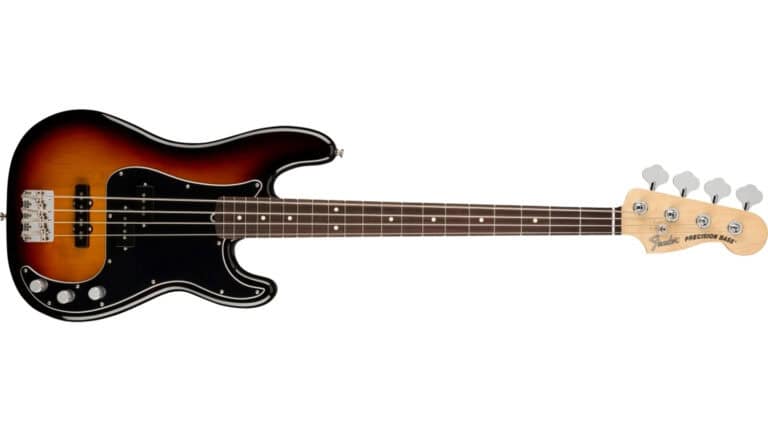
Fender American Performer Precision Bass
A marriage of two classic Fender bass sounds in a Precision package.
Pros
- P and J pickups
- Greasebucket master tone rolls of high end without losing gain
- Comfortable and easy-to-play neck
Cons
- Neck needs to be removed to adjust truss rod
Buy from
We may earn a commission from these links.
Some players want a little more out of a P-bass, and the American Performer delivers. The main feature is that it includes split-coil and singlecoil pickups that can be blended to player taste.
A Fender Greasebucket master tone control lets you roll off high end without losing any gain. It’s a sleek model that’s fairly lightweight and easy to play. By blending the pickups and using the advanced electronics there are a lot of sounds on deck.
Best budget Precision bass: Squier Affinity Series PJ
Best budget Precision bass
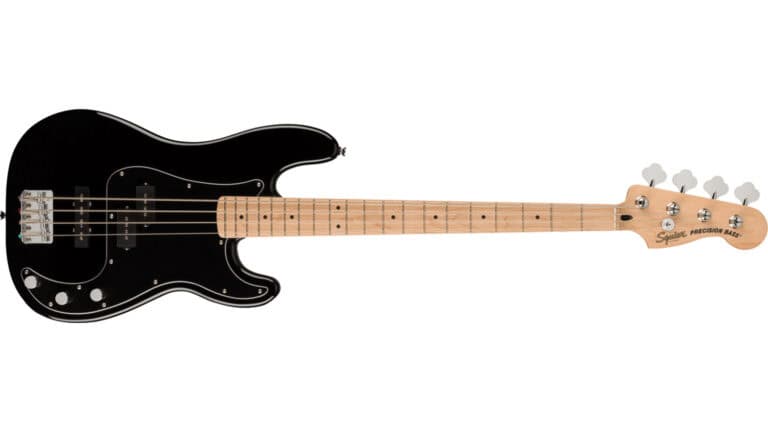
Squier Affinity Series PJ Bass
A model with tonal versatility that’s great for beginners.
Pros
- Lightweight
- Comfortable C-shape neck
- Vintage-style tuners and bridge
Cons
- Ceramic pickups could be improved
Buy from
We may earn a commission from these links.
This model is perfect for beginners and intermediate players alike. It has a lightweight body and slim C-shape maple neck with a good travel.
Its biggest appeal is the combination of P-style and J-style pickups, just like the American Performer. They are ceramic, so it never hurts to consider upgrading them but they sound pretty good on their own.
For beginners and intermediate players looking to get started or add to their collection this is an affordable and great sounding choice.
Precision vs. Jazz Bass – Which is Right for You?
The difference between Precision and Jazz basses really comes down to your style. If you’re looking for a thick rock sound with plenty of low end then the P-bass is the best starting point. If you want a brighter sound with more cut and a slimmer neck then the Jazz bass is worth a shot.
With either choice, you can’t go wrong. There’s a reason these basses set the standard from the very beginning.
FAQ
What’s the main difference between the Fender Jazz Bass and Precision Bass?
The key difference is in their pickup configurations and neck shape. The Precision Bass has a single split-coil pickup, giving it a punchy, mid-focused tone. The Jazz Bass has two single-coil pickups, allowing for more tonal versatility and a brighter, more scooped sound.
Which model is better for beginners?
Both are beginner-friendly, but the Precision Bass is often recommended due to its simple controls and thicker neck, which some players find more comfortable. But players with with smaller hands might prefer the slimmer neck of the Jazz Bass.
Which model do most professional bassists choose?
Many pros own both. The choice really depends on the sound and feel you’re going for.