Like large-diaphragm models, small-diaphragm condenser microphones are one of the most popular styles of condenser mics. They’re similar in concept, but different in execution.
Firstly, they are excellent at picking up transients. This makes them perfect for instruments with fast transients like drums and acoustic guitars. They have a wide frequency response, and can usually take high SPLs.
From recording drums, acoustic guitars, and pianos to capturing room ambience these are some of our favorites.
Best small-diaphragm condenser microphone overall: Neumann KM 184
Best small-diaphragm condenser microphone overall
Neumann KM 184
Smooth sound reproduction with no coloration.
Pros
- Accurate sound reproduction without coloration
- Full frequency range
- Low noise and high overload capacity
Cons
- Cardioid only
- SPL handling could be higher
Buy from
We may earn a commission from these links.
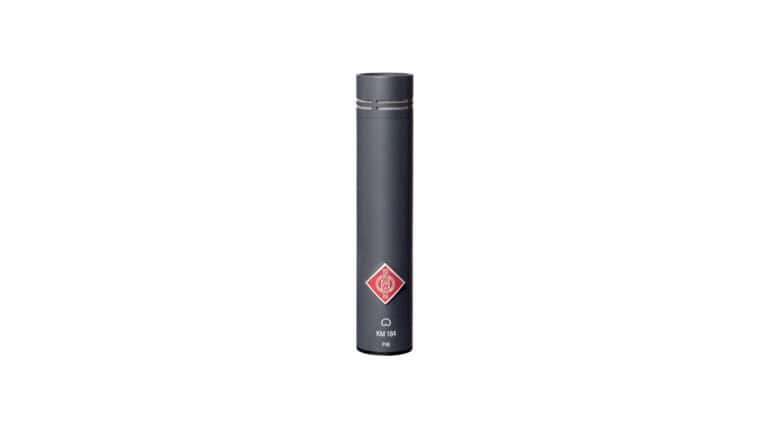
Look up any “best of” microphone list in any category and Neumann will be on it. When it comes to condenser microphones, they’re one of the best manufacturers. The KM series are fantastic small-diaphragm condenser microphones, and the KM 184 is at the top of the heap.
A smooth frequency response is achieved through a pressure-gradient transducer for on and off axis direction. In general, the KM 184 doesn’t introduce any coloration and provides a neutral sound reproduction.
It’s got the same capsule as the KM 84, but has a subtle lift around 9kHz that makes it great for drum overheads. Compared to the KM 84 the dynamic range is 24dB higher and it can handle up to 138dB of SPL.
Like most small-diaphragm condenser microphones the polar pattern is fixed cardioid. The frequency range is wide and ranges from 20Hz to 20kHz, which makes it perfect for drums, piano, or acoustic guitar.
Best high-end small-diaphragm condenser microphone: Peluso Microphone Lab P-84
Best high-end small-diaphragm condenser microphone
Peluso Microphone Lab P-84
One of the best high-end SDC mics with switchable capsules.
Pros
- Switchable cardioid and omni capsules
- Low distortion
- Full frequency response
- Includes shockmount, mic clip, and protective wooden box
Cons
- Expensive
Buy from
We may earn a commission from these links.
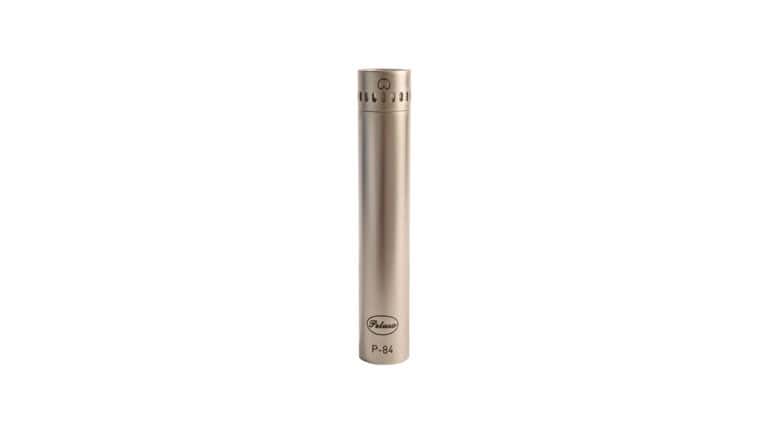
Sometimes you want a microphone that colors the sound, and sometimes you just want natural detail and character. The P-84 is the latter. With a larger transformer than most SDC mics, distortion and interference are eliminated.
Low frequency response is improved and the sound pressure level capacity is stepped up. A 20Hz to 20kHz frequency range adds versatility, but the best feature are the selectable polar patterns. It works in cardioid and omnidirectional, so you can use it for close micing or ambience equally.
It’s not inexpensive, but you’ll be able to use it in more situations than most standard small-diaphragm condenser microphones.
As the first phantom powered microphone, the KM 84 still sets the bar for all other small-diaphragm FET microphones and the P-84 does justice to its legacy.
Best small-diaphragm condenser microphone for acoustic guitar: Sennheiser Evolution e914
Best small-diaphragm condenser microphone for acoustic guitar
Sennheiser e914
One of the best all-around SDC microphones.
Pros
- Great on a variety of sources
- High SPL handling
- 3-way high-pass filtering and pad
- Great price point
Cons
- Cardioid only
Buy from
We may earn a commission from these links.
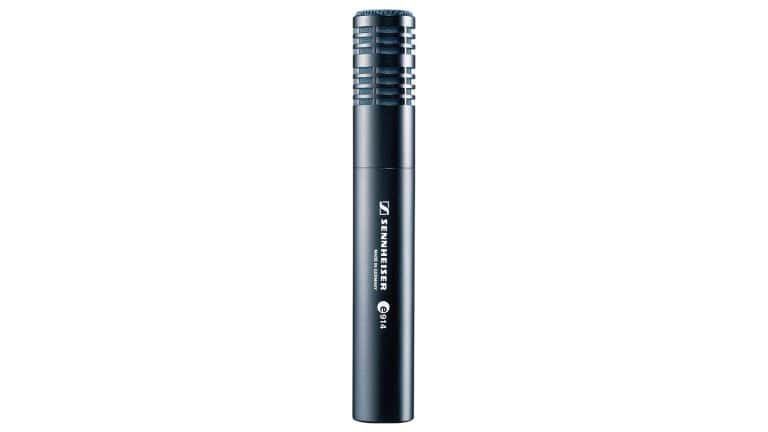
This high-grade condenser microphone is up for taking on multiple micing situations. It catches the articulation of acoustic guitar, the proper wash of drum overheads, or the grandeur and intricacies of a piano.
A wide frequency response makes it versatile enough to easily handle all of these applications, and a maximum SPL handling of 157dB (without pad) means it can take loud sources.
Customization switches aren’t typically common on small-diaphragm condenser microphones, and that’s one of the areas where the e 914 shines. There is a three-position sensitivity switch to add in a -10dB or -20dB pad, and a three-position high-pass filter for adding in a gentle low end cut or a sharp curve.
It excels at capturing acoustic guitar, with a broad 20Hz to 20kHz frequency response. The transient pickup is excellent, so strumming articulation translates flawlessly. It’s great in a single mic setup, or if you want a wide stereo spread.
Best small-diaphragm condenser microphone for drums: Earthworks QTC30
Best small-diaphragm condenser microphone for drums
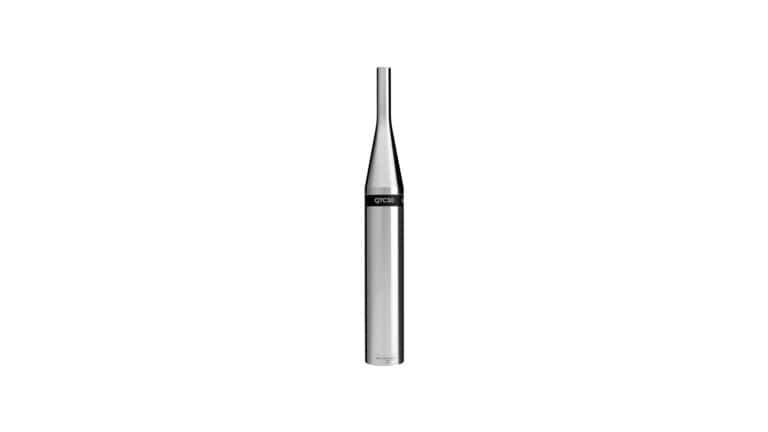
Earthworks QTC30
The widest frequency response you’ll find in a SDC.
Pros
- Very broad frequency response
- High SPL handling
- Great for close and distance micing
Cons
- Odd enclosure shape can be difficult to fit in tight spaces
Buy from
We may earn a commission from these links.
Earthwork microphones have a very unique aesthetic. They’re cylindrical, but there is a taper toward the top. This interesting look isn’t the only thing that sets them apart. They have a sound all their own.
With a flat, extended “Time Coherent” response that ranges from 6Hz to 30kHz it has a low end translation like few others. A clean impulse response picks up transients very quickly, and that along with a 140dB SPL rating makes it a great option on instruments with fast transients like drums.
It’s not for close micing either. Throw a pair of these up in the room and it’s the next best thing to being in it. For sound effects and design, foley, or ADR it captures qualities in sounds like few others.
One of the only downsides is the odd shape of the enclosure. In certain situations it could be difficult to properly fit it in the space of the source. But if you’re looking for a small-diaphragm condenser microphone that colors the sound, look elsewhere. But if you need lifelike realism and accurate sonics the QTC30 is one of the best choices.
Best budget small-diaphragm condenser microphone: sE Electronics sE8
Best budget small-diaphragm condenser microphone
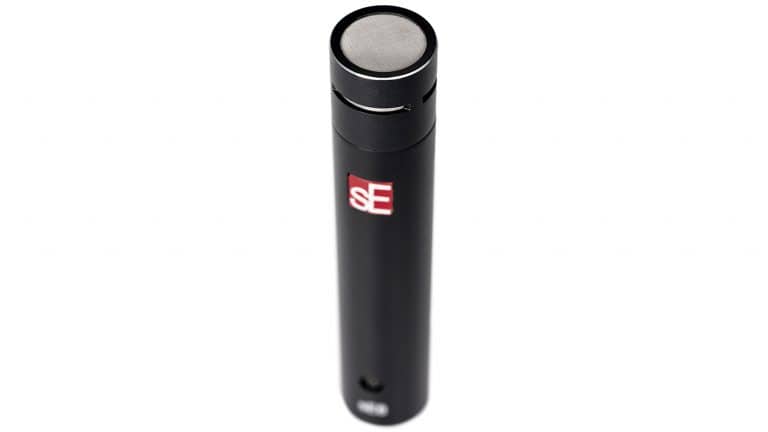
sE Electronics sE8
Hands down the best budget SDC.
Pros
- Excellent build quality for a budget model
- Gold-sputtered capsule
- Two high-pass filters and pads
Cons
- Cardioid only
Buy from
We may earn a commission from these links.
sE Electronics crafts their microphones in their own facility. The gold-sputtered capsule with diamond-cut edge of the sE8 is manufactured in their own “clean room”. The proprietary back plate design provides a balanced and detailed sound with quick transient response.
The circuit doesn’t include any transformers or integrated circuits, which is one of the reasons the sE8 captures acoustic instruments so faithfully. The frequency profile is unique, with a silky high end that doesn’t need much EQ. But if you do want to add EQ it won’t bring in any unpleasant harshness or distortion.
Cut out low end rumble and noise with the two way high-pass filters at 80Hz and 160Hz. To handle overly loud source material there are also two pads at -10dB and -20dB.
It’s impressive how much value sE Electronics packs into the sE8. With a sound of microphones that cost two to three times as much, if you need a small-diaphragm condenser microphone under $300 you’ll be hard pressed to find one that’s better.
FAQ
What is a small-diaphragm condenser microphone?
A small-diaphragm condenser microphone is a type of condenser mic that uses a smaller diaphragm, typically around ½ inch in diameter. They have a faster transient response than large-diaphragm microphones, extended high-frequency detail, and consistent pickup patterns. They’re commonly used for recording instruments with fast transients like acoustic guitar, piano, drum overheads.
How is a small-diaphragm mic different from a large-diaphragm mic?
Small-diaphragm mics are more accurate and neutral, while large-diaphragm mics tend to color the sound and emphasize certain frequencies. SDCs excel at capturing detail and clarity, and large-diaphragm condensers are often preferred for vocals and sources where warmth and depth are desired.
Are small-diaphragm condensers good for vocals?
They’re not typically the first choice for vocals, but SDCs can work well in certain contexts like choral recordings, group vocals. But they may sound too thin or clinical for solo vocal work, especially in pop or rock genres.