AKG has been making condenser microphones for decades, but while it’s best-known for its beloved high-end models, recently, it unveiled a set of cheaper models. The C114 sits at the front of the pack, aimed squarely at home and project studios, with a $229 price tag — and as an alternative to the beloved C414, but at a lower price. It sits at a higher price point than all the sub-$150 microphones out there, but it’s designed to be more versatile and better-built.
The appeal is pretty simple — one microphone that can handle vocals, acoustic instruments, percussion, and more, while sounding a little more detailed than the alternatives. The $229 price tag won’t shock most serious hobbyists or small commercial setups, but it does put the C114 above entry-level offerings from the likes of Audio-Technica. That means it needs to earn it.

AKG C114 review
The AKG C114 is bright, detailed, and relatively affordable, making it perfect for any budget buyer that wants a workhorse.
Pros
- Solid build
- Bright tone
- Versatile
- Inexpensive
Cons
- No protective case
Buy from
We may earn a commission from these links.
Design and Build
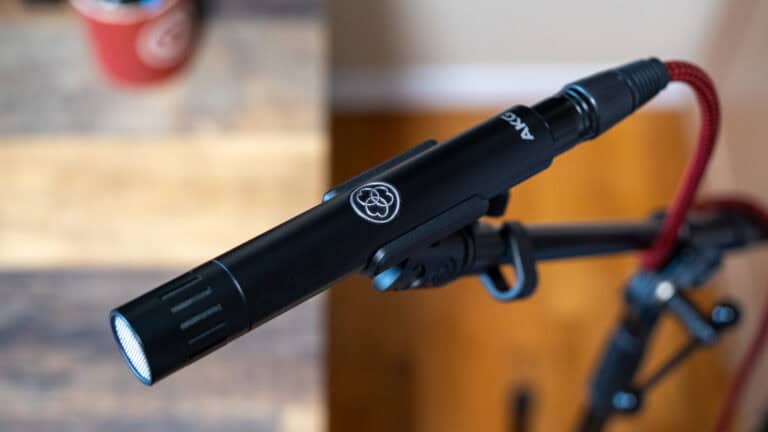
Right out of the box, the C114 makes a good impression. The metal body feels strong and premium — this is clearly a microphone built to handle the everyday bumps of studio life. The black and silver finish looks professional without trying too hard, and the included shock mount matches that quality, offering a secure fit and strong construction.
On the front of the microphone can be found a polar pattern switch, allowing users to toggle between omnidirectional, cardioid, and figure-eight, which dramatically expands what this single mic can do. Need to capture room ambience? Go with the omni pattern. Recording a single source with maximum rejection? Cardioid. Interview setup or two sources at once? Figure-eight. That kind of flexibility goes a long way toward justifying the price for studios trying to do more with less gear. Sure, it doesn’t have the pattern selection on offer by its more expensive cousin, the AKG C414, but it has what you’ll be looking for 99% of the time.

What is missing is a pad switch for those ultra-loud sources, but I found this to largely be a non-issue — the microphone is designed to handle a variety of loudnesses.
AKG also gets credit for their environmental approach — the company says the C114 uses 100% recycled PIR metals and alloys, which is a welcome move in an industry that doesn’t always think about sustainability. That said, there’s one notable gap — there’s no protective case or carrying bag in the box. When cheaper microphones often include at least a basic soft pouch, this feels like a miss, especially for anyone planning to move the mic between locations, or, like many home studios, store in a drawer.
Sound Quality
Inside, the C114 is a large-diaphragm condenser built with flexibility in mind. AKG has designed it for a low noise floor and high maximum SPL, so it can handle everything from quiet vocal takes to loud percussion without distortion or self-noise getting in the way.
The capsule design takes inspiration from one of AKG’s most celebrated microphones. Like the legendary C12, the C114 uses an edge-terminated diaphragm, a choice meant to improve high-frequency performance and capture that sense of sparkle and air the C12 is known for. Comparing it directly to a vintage C12 at this price wouldn’t be fair, but the design philosophy clearly shapes the C114’s sonic character.
In practice, the sound is excellent. It’s vibrant, clean, and bright. The frequency response stays reasonably neutral for the most part, making it a sensible pick if you need one microphone to cover multiple duties. There’s an obvious boost in the highs, which gives the C114 its personality — detailed and present rather than necessarily warm.

Testing it across different sources showed where it excels. On percussion, the C114 captured brightness and transient detail that helps things like shakers add nicely to a mix more dominated by instruments that live more in lower frequencies. Vocals gained extra sparkle and presence, though that did mean a touch more sibilance to deal with during mixing. Taming sibilance with a de-esser is standard practice anyway, and the trade-off for that added clarity felt worthwhile. Acoustic guitar recordings benefited similarly from the high-frequency emphasis, gaining a bright, detailed quality that suits my mixing style of leaning into the percussive elements of an acoustic guitar. Some extra string noise occasionally needed attention, but that’s a reasonable compromise for the overall sound.
This brightness was there across all polar patterns, too. To be clear, the vast majority of my recording was done with the cardioid pattern, though I did use the others for the purpose of this review, and found a similarly bright, vibrant tone.
If you’re after an ultra-warm, vintage-style sound, look elsewhere — the C114 is built for clarity and detail, not thick, rounded warmth. That said, it doesn’t lack body or depth, it just prioritizes the upper frequencies. Adding warmth in the mix was straightforward, and the clean capture gave plenty to work with.
Conclusion

The AKG C114 proves itself a capable and versatile option for home and project studios. The high-frequency detail and overall clarity make it an excellent choice if you want one microphone that handles vocals, acoustic instruments, and percussion without constantly swapping gear. The switchable polar patterns add genuine flexibility, and the build quality inspires confidence.
At $229, you’re paying more than entry-level condensers from other brands, but the higher price definitely feels justified if you value that detailed, present sound. Beyond music production, the C114 works well for spoken-word applications like podcasting, where the clarity helps voices cut through and any missing low-mid warmth can easily be added in post. For small studios that want quality and versatility without venturing into premium territory, the C114 makes a strong case at this price.