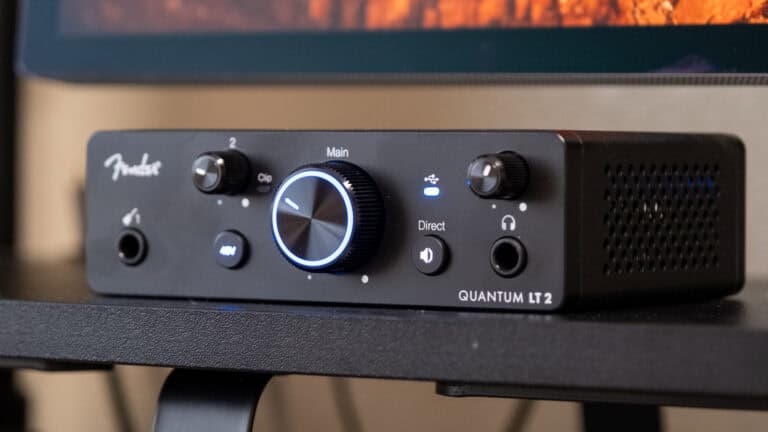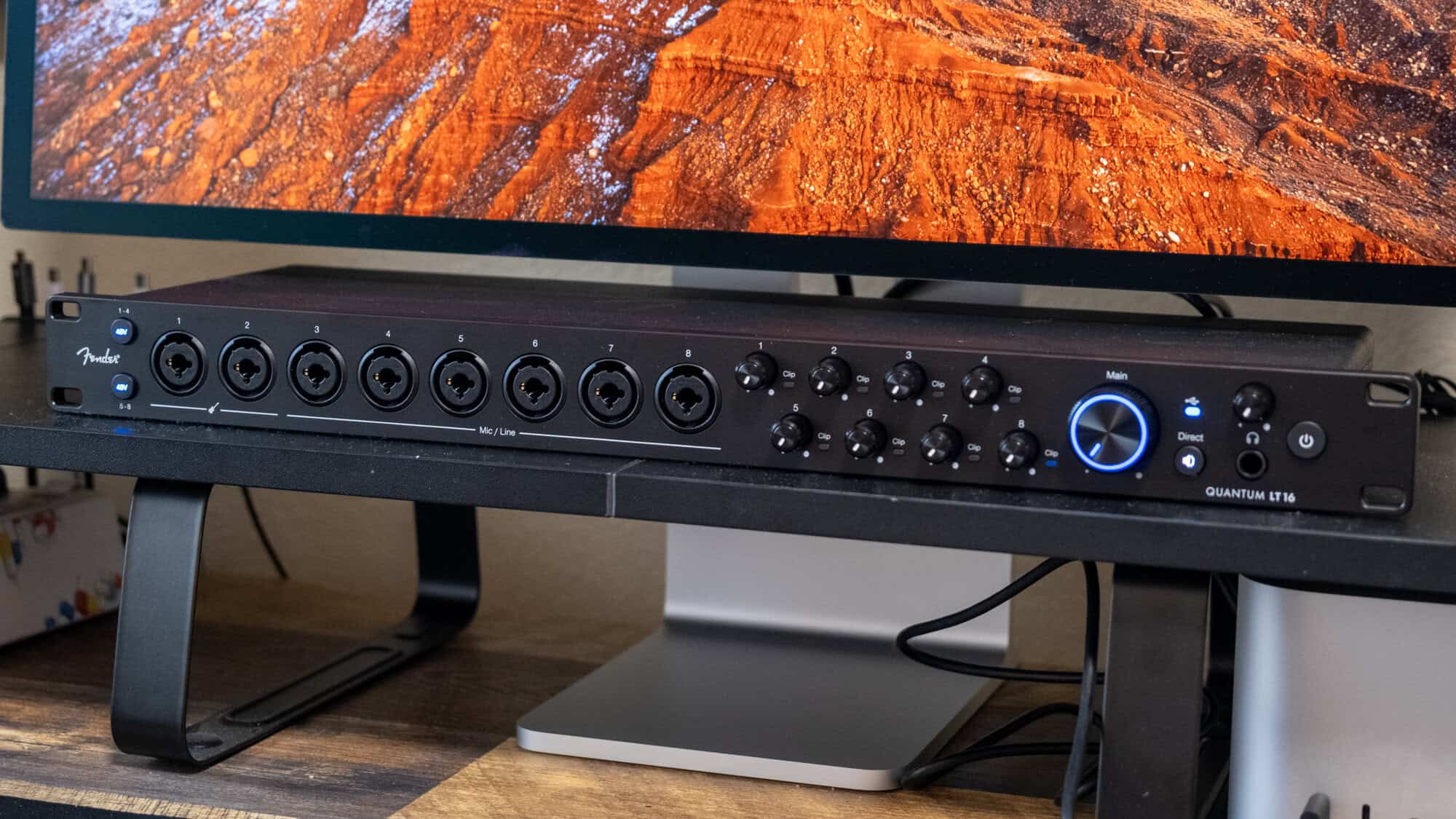
Fender announced its acquisition of PreSonus a few years ago, but that acquisition seems to now be complete. Case in point — Fender has finally launched a series of audio interfaces with clear PreSonus DNA, but with Fender’s branding. One of those is the new Fender Quantum LT 16, which sits at the top of the Quantum LT lineup — which also includes the smaller LT 2 and LT 4. At $499, it’s going after project studios, bands, multi-instrumentalists, and electronic musicians who want flexible I/O and low-latency performance for recording and streaming — without jumping to a significantly more expensive rack solution.
I’ve been a long-time fan of PreSonus interfaces, and I have to say — Fender sure is keeping what made PreSonus great alive.
Fender Quantum LT 16 review
The Fender Quantum LT 16 is a rack-mounted interface with great-sounding preamps and solid features at a very reasonable price.
Pros
- Durable design
- Excellent audio
- Reasonable price
- Comes with Studio One Pro
Cons
- No ADAT support
Buy from
We may earn a commission from these links.
Design and connectivity
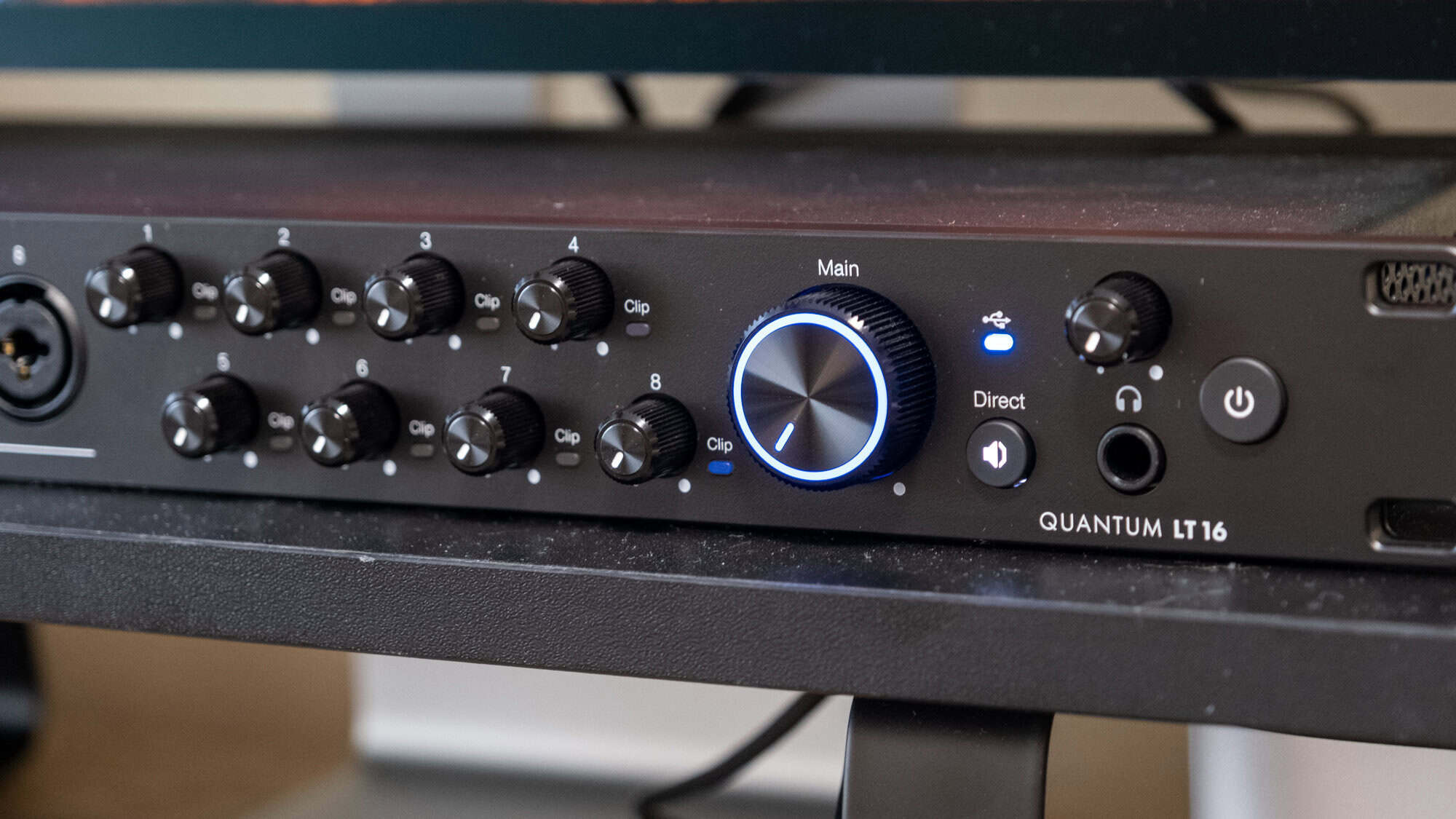
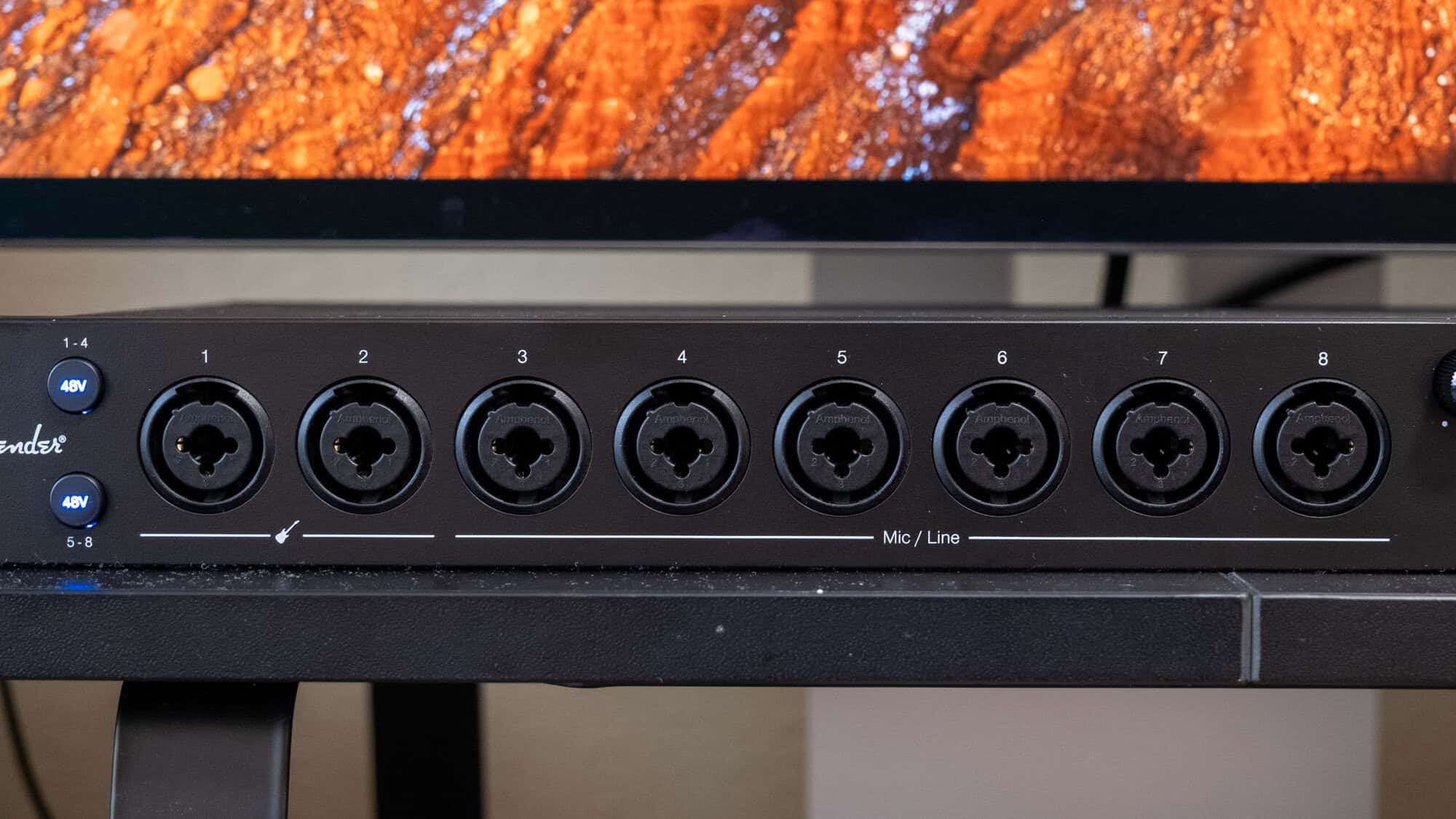
The Fender Quantum LT 16 takes up a single rack space, wrapped in a black metal chassis that feels like it can handle the wear and tear of both studio and live environments. The front panel gives you eight XLR/TRS combo jacks for microphones, and two of those double as Fender-designed ¼-inch instrument inputs with 1M Ohm impedance — tuned specifically for guitars and basses. Phantom power gets toggled in two groups (inputs 1–4 and 5–8). You also get a headphone jack and power button up front. It might have been nice to have a second headphone jack, like some previous-gen 1U PreSonus interfaces.
There’s also plenty of connectivity on the back. There are eight TRS line inputs (inputs 9–16) with switchable +4 dBu / -10 dBV operation and 10K Ohm impedance, along with eight balanced TRS line outputs, 5-pin MIDI in and out, USB-C, and a DC power input. That impedance switching on the line inputs is a practical inclusion—it means you can integrate both pro and consumer-level gear without having to think too hard about it.
The one real omission worth calling out is ADAT expansion. If you think you’ll eventually need more than 16 inputs — or you’ve already got outboard preamps with ADAT output, you may need to look elsewhere. For a lot of project studio users that’s never going to be an issue, but it’s something to be aware of if expandability matters to you.
Features
The Quantum LT 16 runs custom low-latency drivers built for real-time monitoring and recording. What that means in practice is you can track with software effects and not deal with the kind of perceptible delay that throws off a performance.
One of the more interesting inclusions is Standalone Mixer Mode, which lets the interface operate without being tethered to a computer. This has become increasingly common in modern interfaces, and it makes a ton of sense — it turns the hardware into something way more versatile for rehearsals, small live gigs, or classroom settings where you don’t want to deal with booting up a laptop. Alongside that, there’s Standalone Mic Pre Mode, which essentially converts the unit into an 8-channel microphone preamp for integration into bigger setups. If you’ve already got a larger console or another interface that just needs more preamps, the LT 16 can slot right into that role.
On the specs front, sample rates go from 44.1 kHz up to 192 kHz at 24-bit resolution. The outputs are DC-coupled, which is helpful if you’re into electronic music — it lets the interface send control voltage to modular and analog synths, essentially bridging the gap between your DAW and your hardware synth rig.
For software, the LT 16 comes with a perpetual license for Fender Studio Pro (valued at $199.99), along with exclusive Fender Mustang and Rumble software plug-ins and an integrated drum beat metronome spanning genres like rock, blues, jazz, and metal. Setup and configuration happen through My Fender access and Universal Control compatibility, which anyone coming from PreSonus gear will already know their way around.
Sound quality
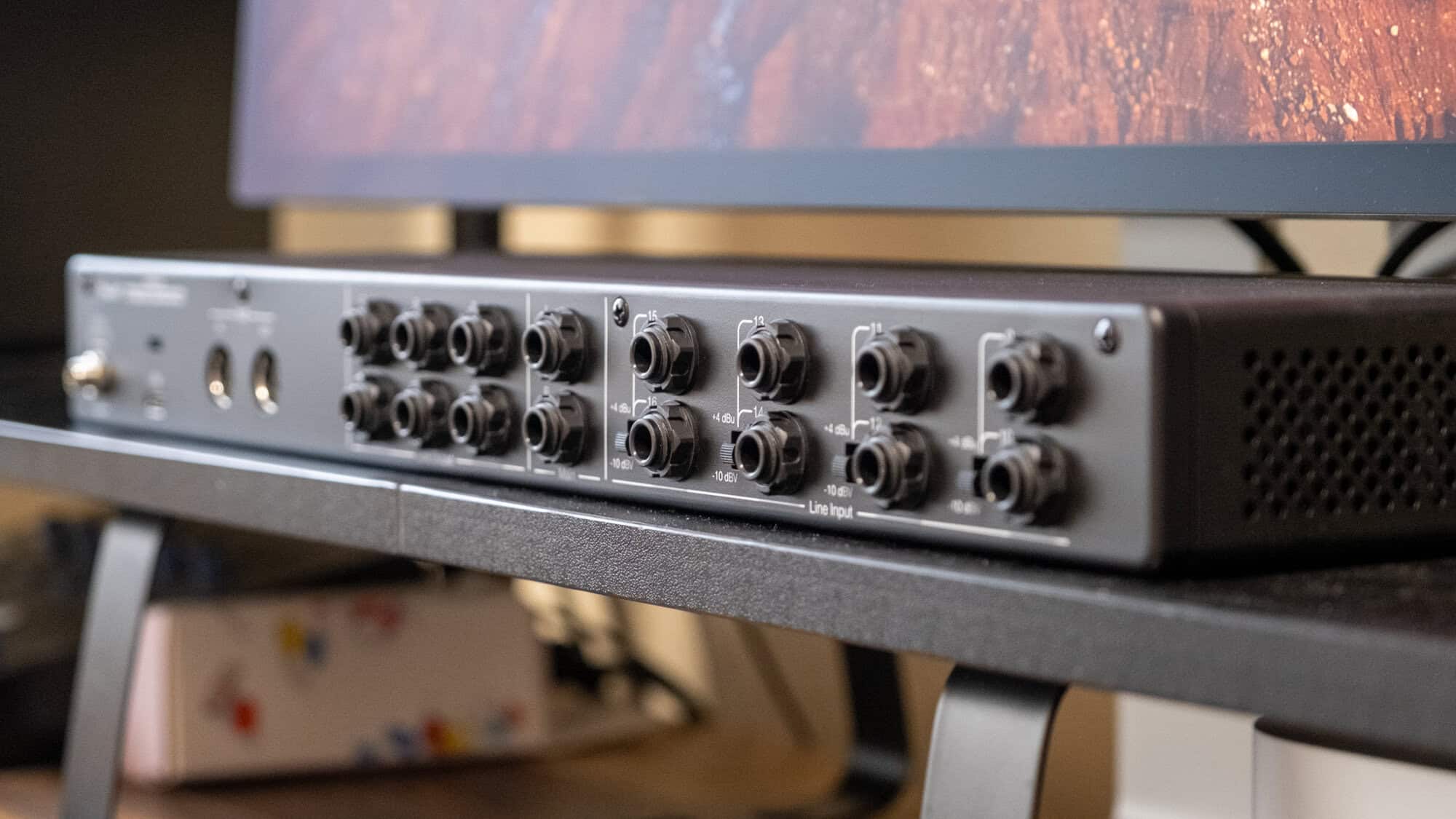
No surprises here — the Fender Quantum LT 16 sounds excellent. Those eight MAX-HD microphone preamps deliver up to 75 dB of gain with 115 dB of dynamic range and THD+N rated at 0.001%. In actual use, the preamps are clean, dynamic, and versatile enough to handle everything from condensers on acoustic instruments to dynamic mics on loud guitar cabinets without any strain.
In testing, I recorded a variety of different instruments, and found that it was up to the task for all of them. Again, that’s certainly not surprising. I’ve only really had good experiences with PreSonus interfaces in the past and have always found their preamps to be quite clean and dynamic. That remains true here.
Conclusions

The Fender Quantum LT 16 is a great interface overall. At $499, particularly with Fender Studio Pro (formerly Studio One Pro) included as a perpetual license, it represents strong value for project studios and anyone dealing with multi-input recording scenarios. Studio One has gotten better and better over the years, and having it bundled permanently rather than as a trial or subscription sweetens things considerably. The lack of ADAT expansion is the main limitation to keep in mind, but if 16 inputs cover what you need (and for most project studio users, they absolutely will) the Quantum LT 16 is an easy recommendation.