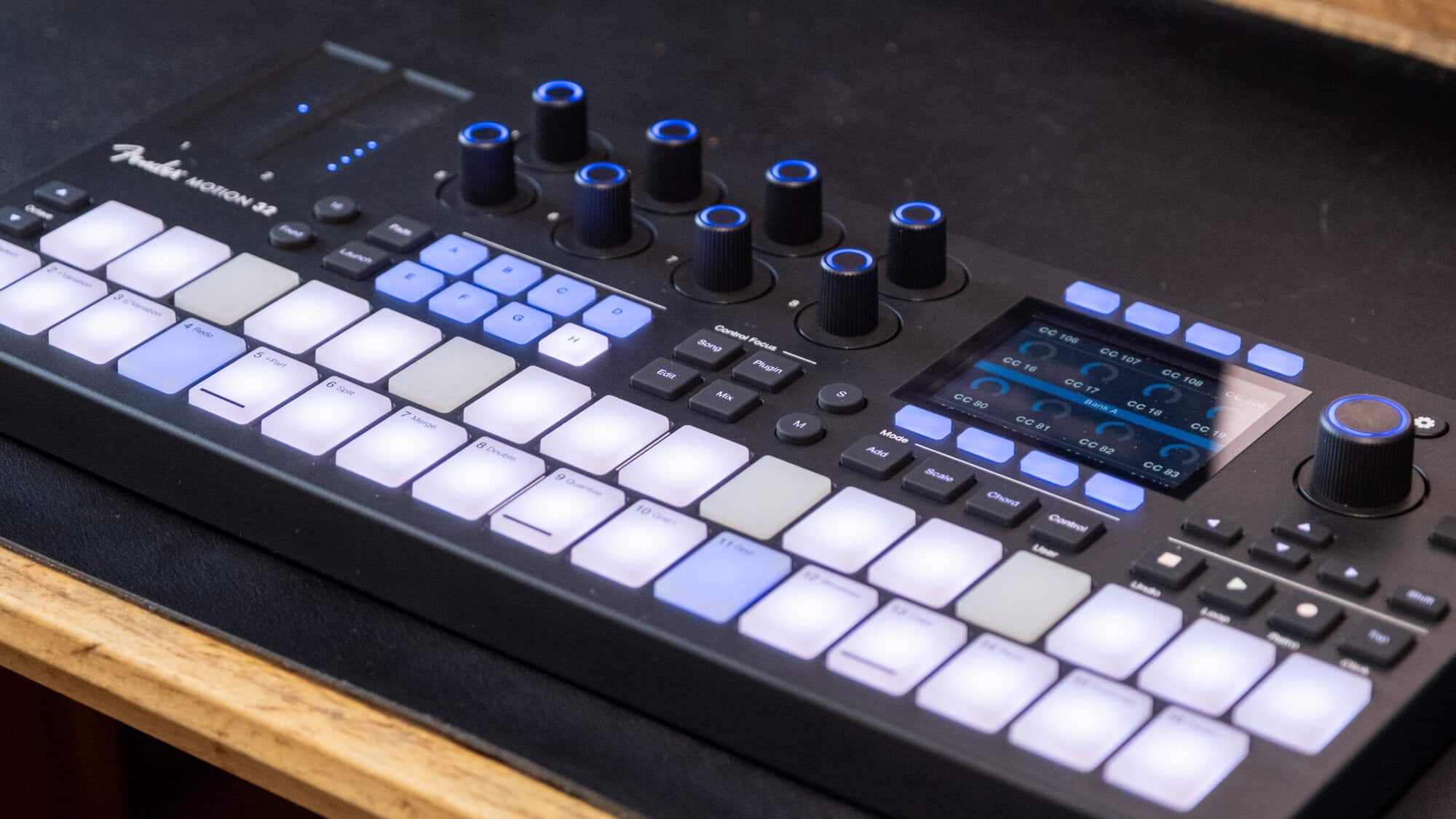
Fender’s acquisition of PreSonus has meant a slew of new Fender-branded recording products, including some more focused on MIDI. The first Fender-branded MIDI-controller is called the Fender Motion 32, and it’s the larger of two new MIDI controllers, built with 32 RGB velocity-sensitive pads with polyphonic aftertouch, and developed with Italian keybed specialist FATAR.
As you would expect from a Fender/PreSonus product, the controller comes bundled with plenty of great software. Fender bundles a perpetual license for Fender Studio Pro, its renamed version of PreSonus Studio One Pro — a DAW that has seriously come into its own over the past few years. But, how does the Fender Motion 32 actually perform — and is it worth buying against a slew of great-quality controllers in this price range? I’ve been testing it to find out for myself.
Design and build
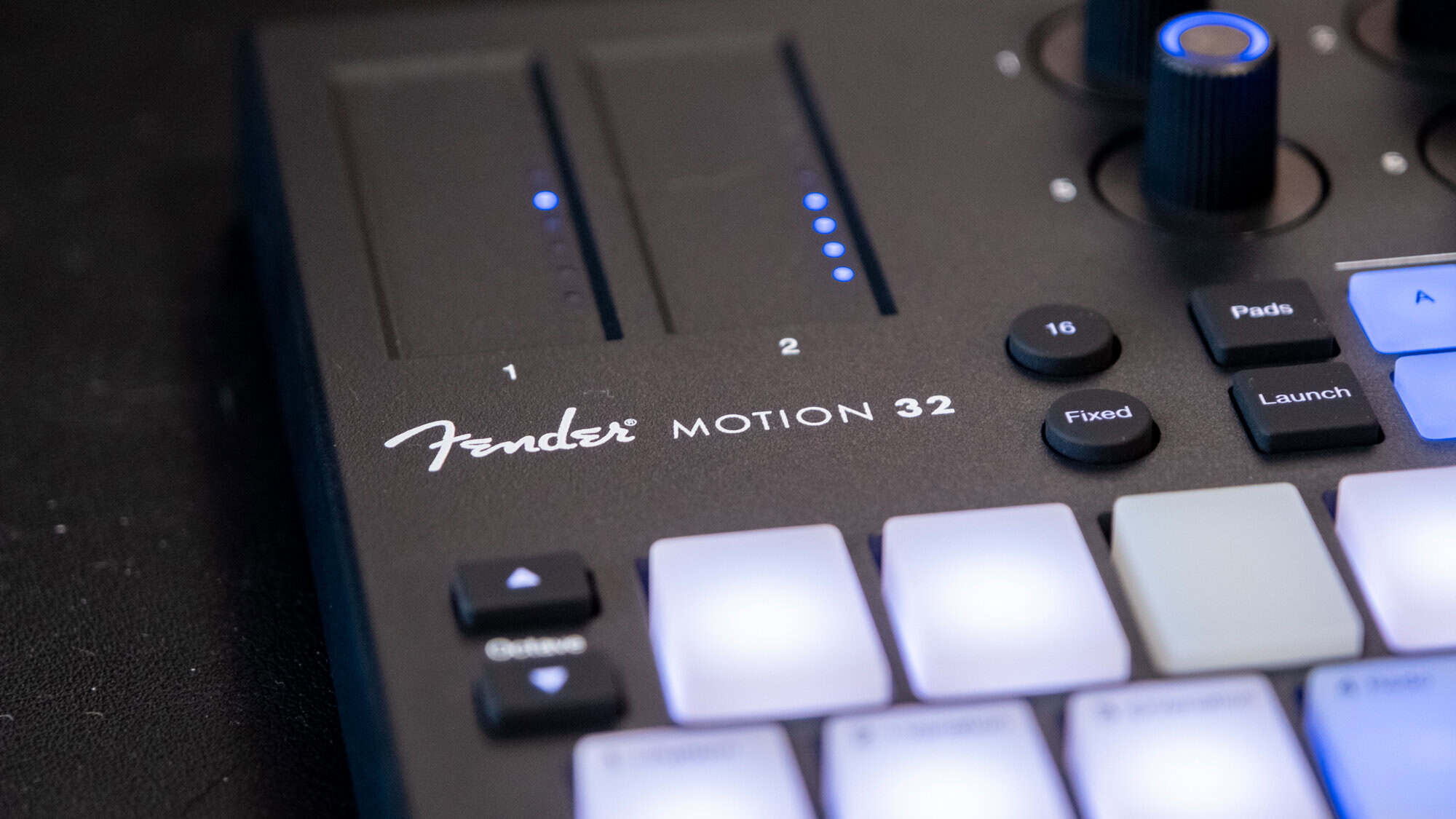
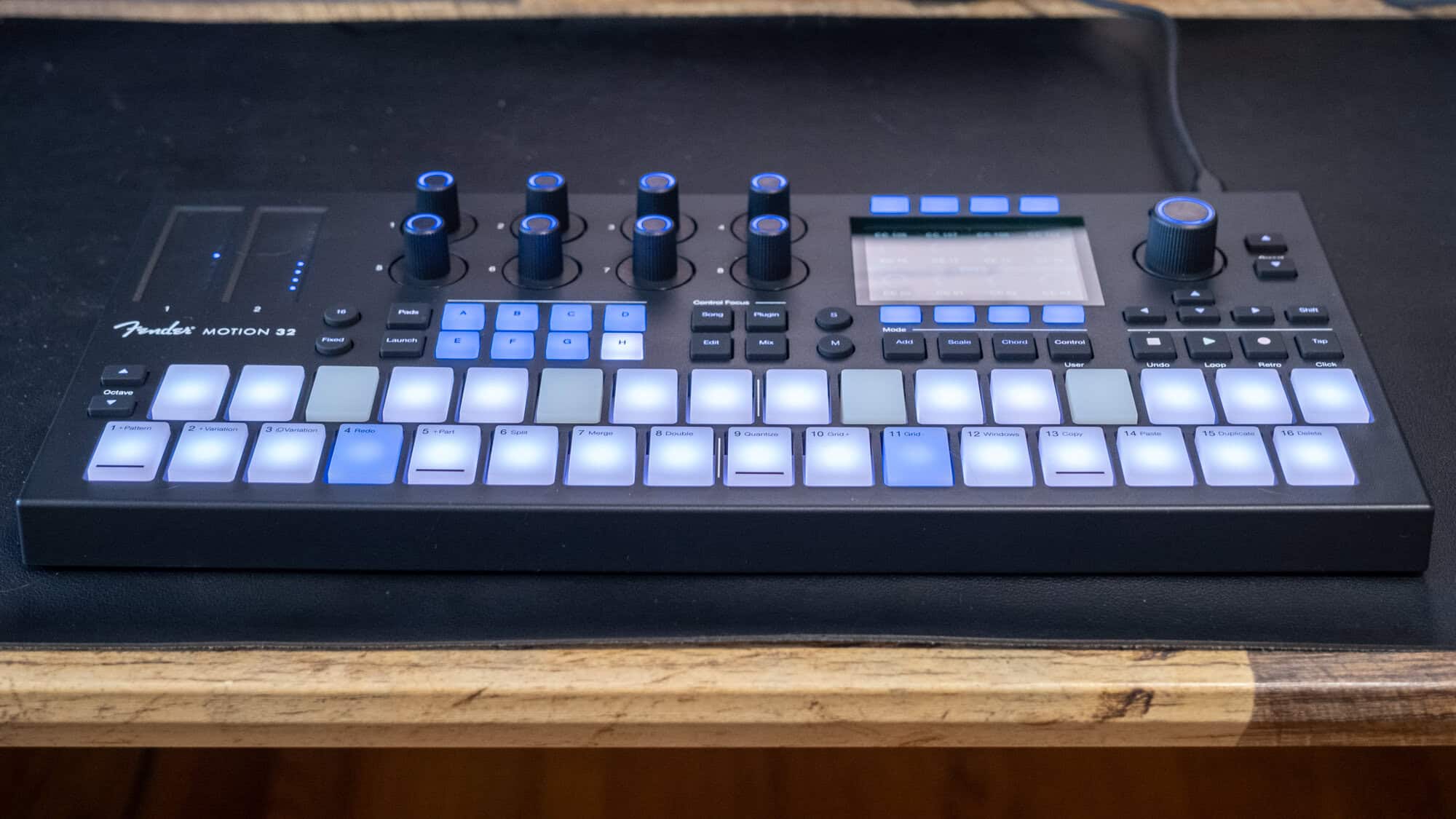
The first thing you’ll notice about the design of the Fender Motion 32 is that it’s pretty well built and sleek. It has 32 pads staggered in two rows across the bottom of the device. That’s the same basic idea PreSonus tried with the Atom SQ, which makes sense given the lineage. Above the pads you get eight touch-sensitive illuminated encoders, two expressive touch strips, a large display, and transport and session controls. There’s also a dedicated “Add” button that inserts a virtual instrument, audio track or effect in Studio Pro without touching the computer.
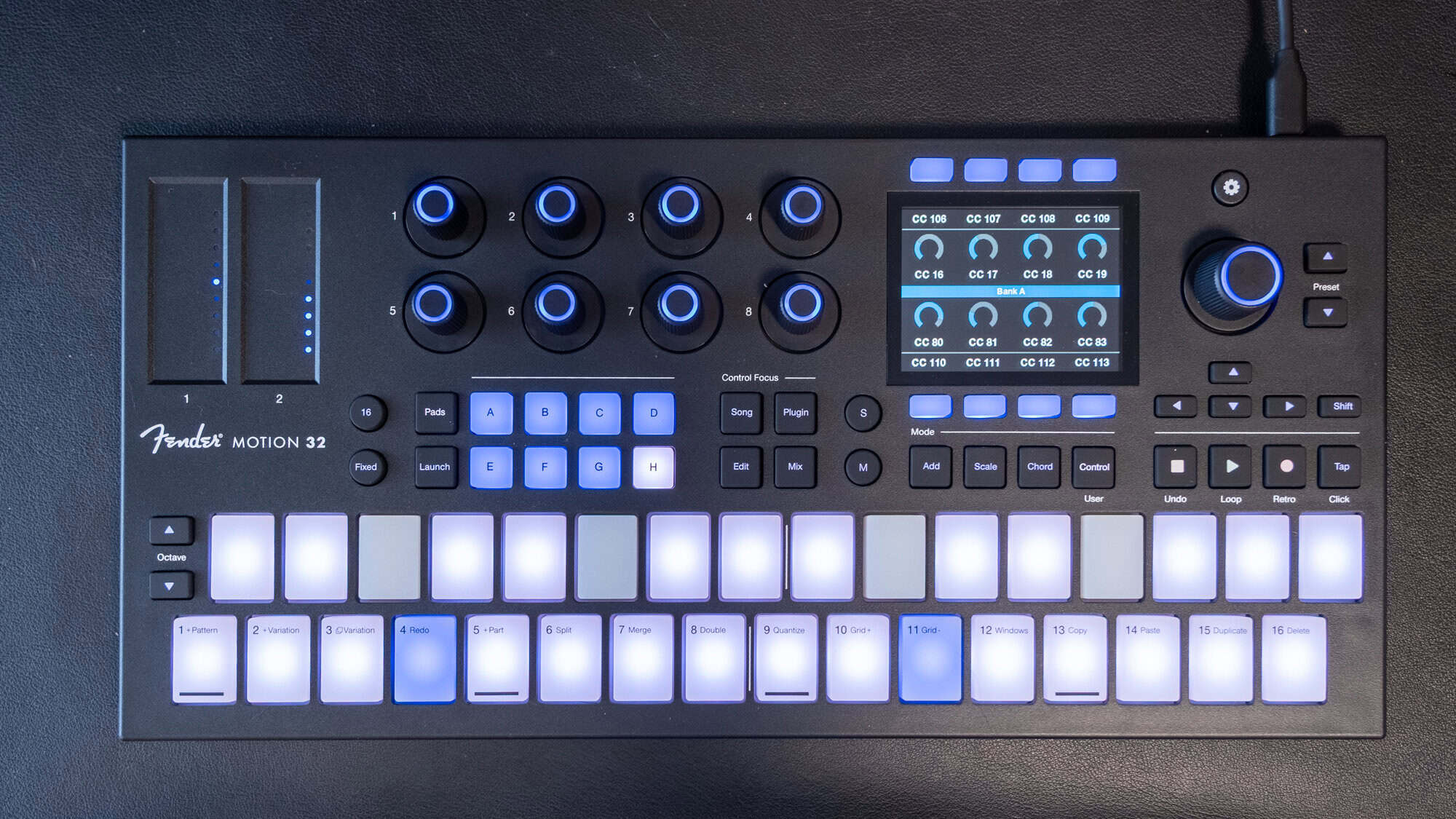
Polyphonic aftertouch is the headline feature on the Motion 32, and it can be uncommon at this price — though it has thankfully started to become slightly more common. Essentially, the pads read pressure individually after a note is struck, so you can hold a pad and lean into it to open a filter or swell the volume of that one note while others ring unaffected. Most pad controllers either skip aftertouch entirely or read a single pressure value for the whole surface.
Whether it feels good is another matter. Fender says this is FATAR’s first pad design, and FATAR’s reputation was built on keybeds, not rubber pads. Thankfully, they feel perfectly good, especially for a product in this price range.
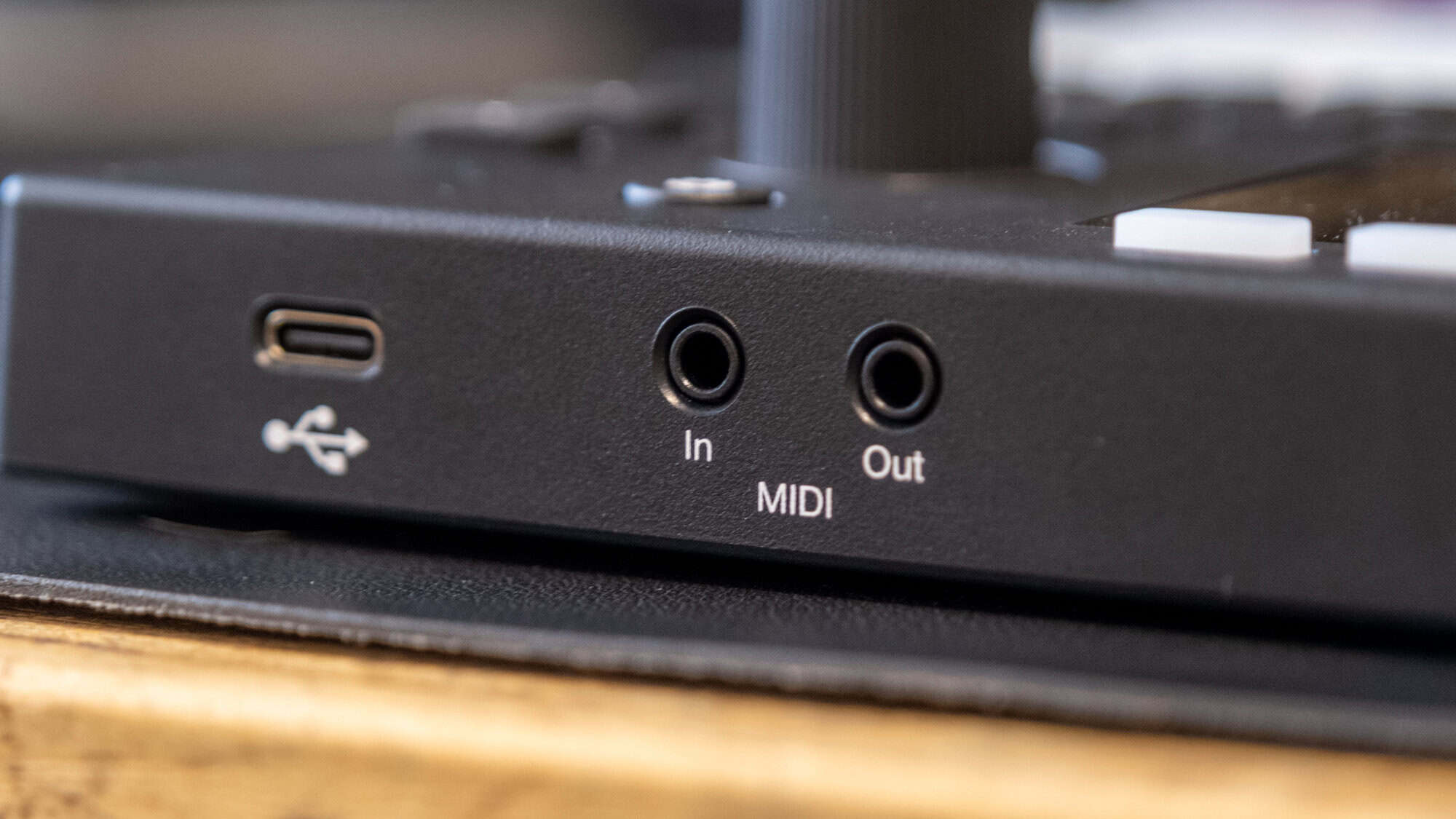
Connectivity is straightforward. The unit runs bus-powered over USB-C 2.0, and there’s MIDI I/O for external synths and drum machines via two 3.5mm TRS (Type-B) jacks.
In general, I like the design a lot. It’s reasonably thought through, and the controller felt strong enough to withstand most day-to-day abuse. I also found the pads to feel reasonably premium, and the encoders felt nice and high-end too.
Software and Studio Pro integration
As you would expect, one of the big selling points of the Fender Motion 32 is its deep integration with Studio Pro. Things like track and timeline navigation, transport, recording, editing, plug-in and instrument control, mixing and automation are all reachable from the hardware, with the Add button handling the insert-a-track chores that normally send you back to the mouse. That can be pretty helpful when you’re in the flow.
The bundle is pretty good value too. Fender sells Studio Pro separately as a paid product, so including a perpetual license for the current version, plus a year of new feature releases, effectively discounts the controller by a meaningful amount — for someone who doesn’t already own a DAW, $329.99 buys the controller and the software in one go, and that’s hard to match by piecing together a controller and a DAW separately. It’s perhaps not quite as useful for those that already own Studio Pro or who use another DAW.
The Motion 32 works with other DAWs too though — Fender names Logic Pro, Ableton Live, FL Studio and Cubase as supported, and the Motion 32 works as a generic MIDI device with anything that speaks MIDI. But, the integration isn’t quite as deep as what you get with Studio Pro, as you might expect.
It helps to split the controller in two. The pad engine lives in the hardware — note layout, the 30-plus chord progressions, scales, velocity modes and aftertouch all run onboard, which is why a “standalone MIDI mode” exists and travels to any DAW. The session functions do not travel at all. Control Link and AutoFill plug-in mapping, the Add button, Mix Mode and Retrospective Record are Studio Pro features, not MIDI messages.
Conclusion
The Fender Motion 32 is a great MIDI controller for the price — especially if you use Studio Pro already. It’s a solid-looking and feeling controller, with high-quality controls, at a pretty reasonable price. For someone starting from zero who wants a controller and serious software in a single $329.99 purchase, the Motion 32 is an easy recommendation.
There are, of course, alternatives though. Perhaps the most obvious is Fender’s own Motion 16, which comes at $269.99. The difference really comes down to layout — the Motion 16 has a conventional 4×4 grid that you might prefer for certain work, but it also has a smaller display. If all you want is drum pads, the 16 or a cheaper pad controller does that job for less.
For a Live or Logic user, it’s a much harder sell. A Push or a Novation Launchpad is purpose-built for Live in a way the Motion 32 isn’t — and you’re paying for a perpetual DAW license you won’t use. Basically, it’s probably worth buying a controller that integrates with the DAW that you actually use, unless you’re willing to make the switch.
That’s to say, if you do want a controller that works very well with Studio Pro, or you’re starting from scratch and are willing to learn Studio Pro, the Fender Motion 32 is absolutely worth considering.